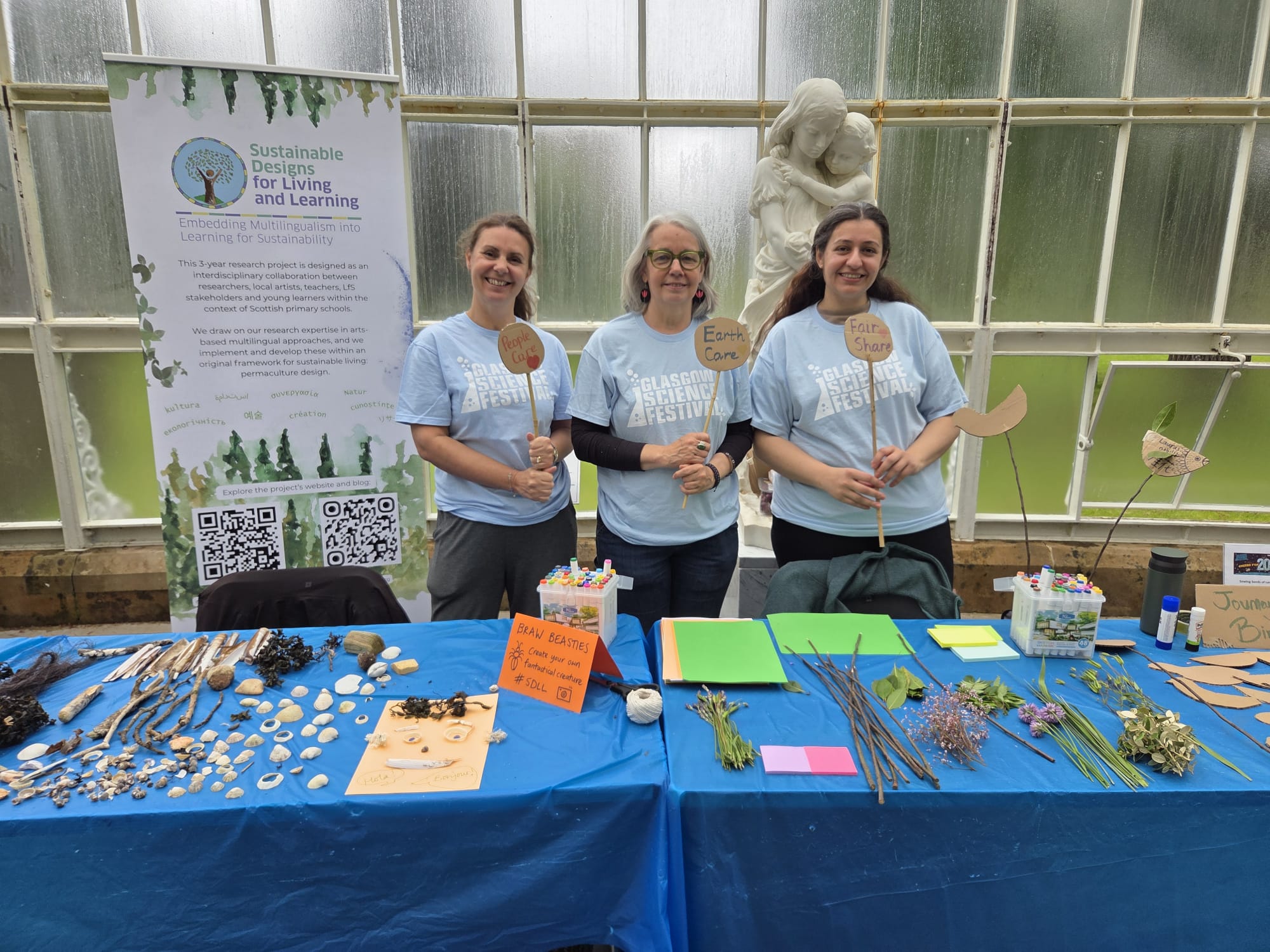
The SDLL team was delighted to take part in this year’s Glasgow Science Festival, hosting a vibrant and welcoming stall in the beautiful surroundings of the Botanic Gardens in Glasgow’s West End. Nestled among the greenery, glasshouses, and curious minds of all ages, our theme, “Sowing Seeds of Languages”, captured both the spirit of the festival and our passion for nurturing linguistic curiosity alongside nature in creative and engaging ways.
Throughout the day, we were thrilled to welcome children, families, and visitors from across the globe. The diversity of languages, accents, and cultural perspectives brought an extra layer of richness to our stall. Conversations flowed freely, not only in English, but in many different languages, with one of our 6-year-old participants conversing in 4 languages (French, Dutch, Russian and English) with members of the SDLL team and her family! Our tabletop activities aimed to show that languages can be playful, creative, and rooted in shared experiences. By combining language with art, nature, and storytelling, we encouraged participants to explore how communication goes far beyond words alone. Using 3 ethics of permaculture, Earth Care, People Care and Fair Share, sticks, pens and plants were gathered and set on the table to explore languages and discuss the importance of our project.
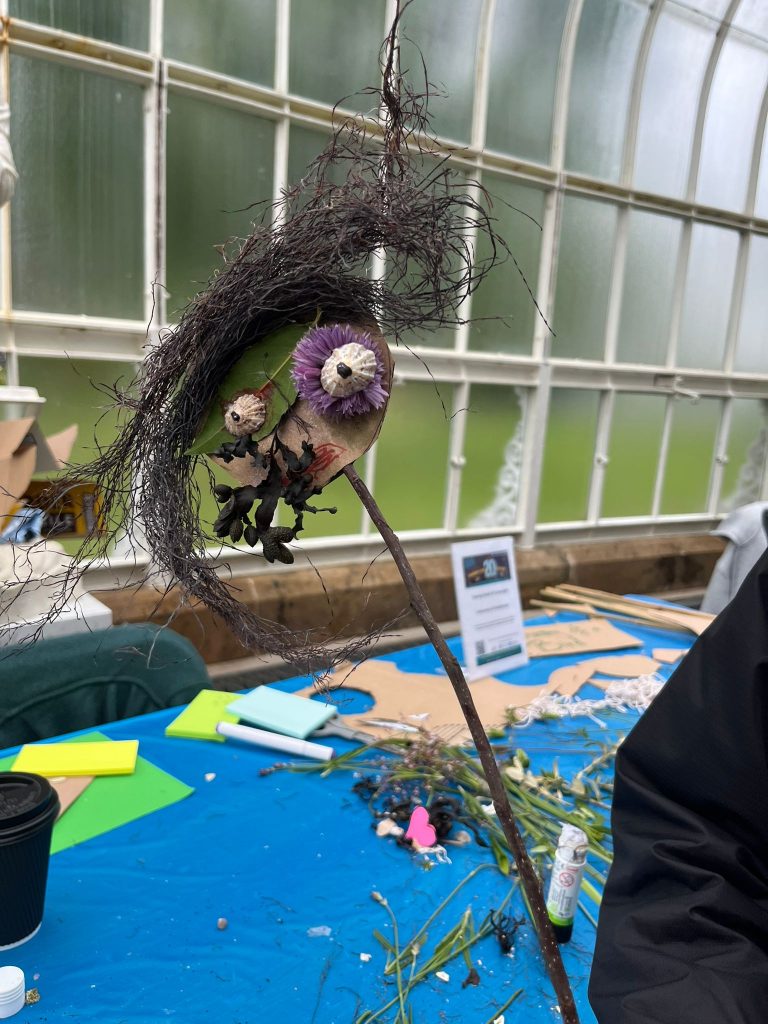
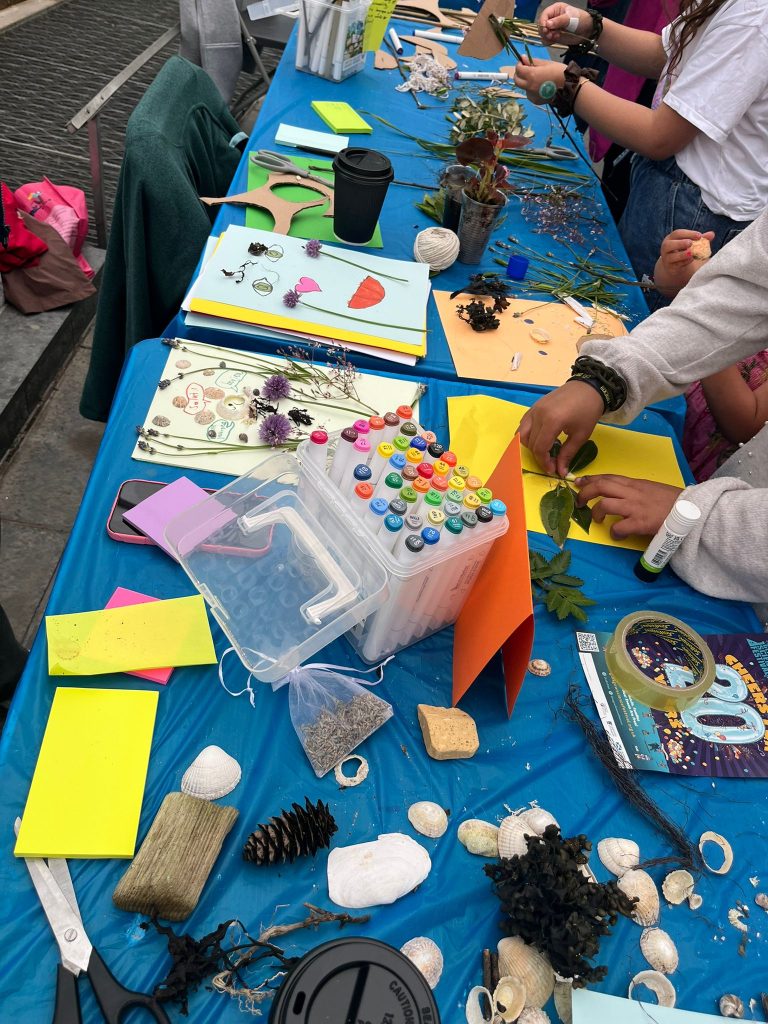
One of the standout activities at our stall invited participants to get hands-on with natural materials and create their own “braw beasties”, a delightful Scots term meaning “fine” or “wonderful” creatures. Using a rich variety of materials, children and adults crafted imaginative creations from:
- Vegetation such as chive flowers, lavender stalks,
- London pride, all hand-picked from Jane’s garden
- Seaweed and shells gathered on the beaches of Bute
- Pebbles of all shapes and sizes
And even… a tiny creature’s skull, which sparked both curiosity and excitement from adults and children alike! Well done to the young participant who identified this as a duck skull and plans to study veterinary science.
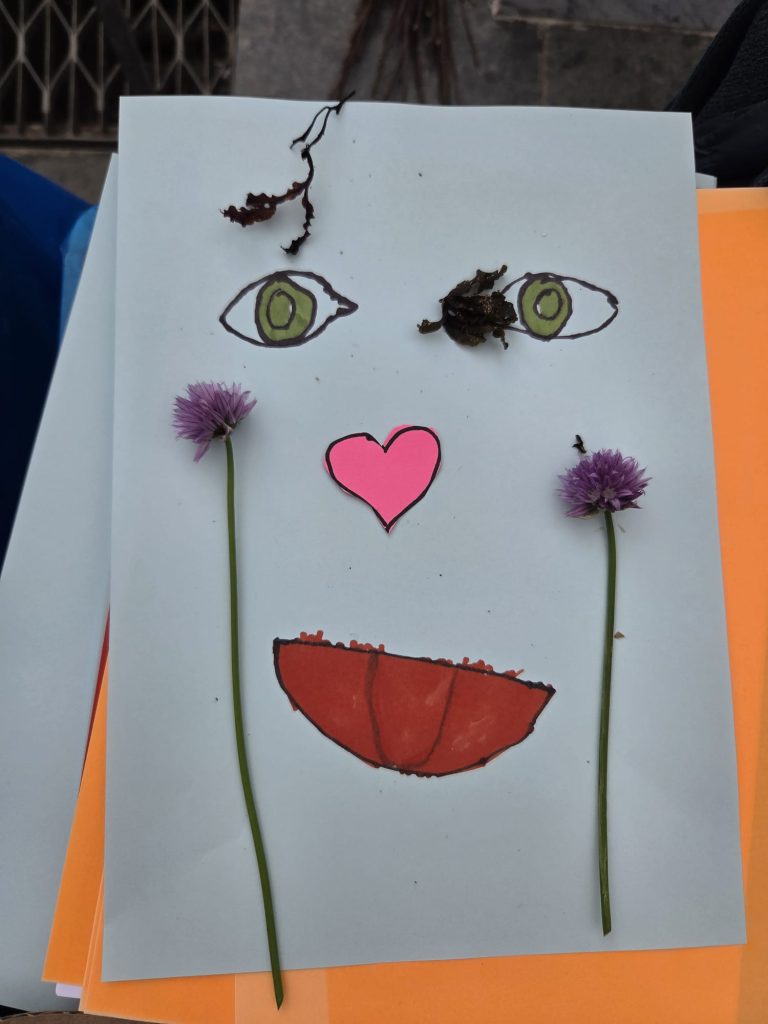
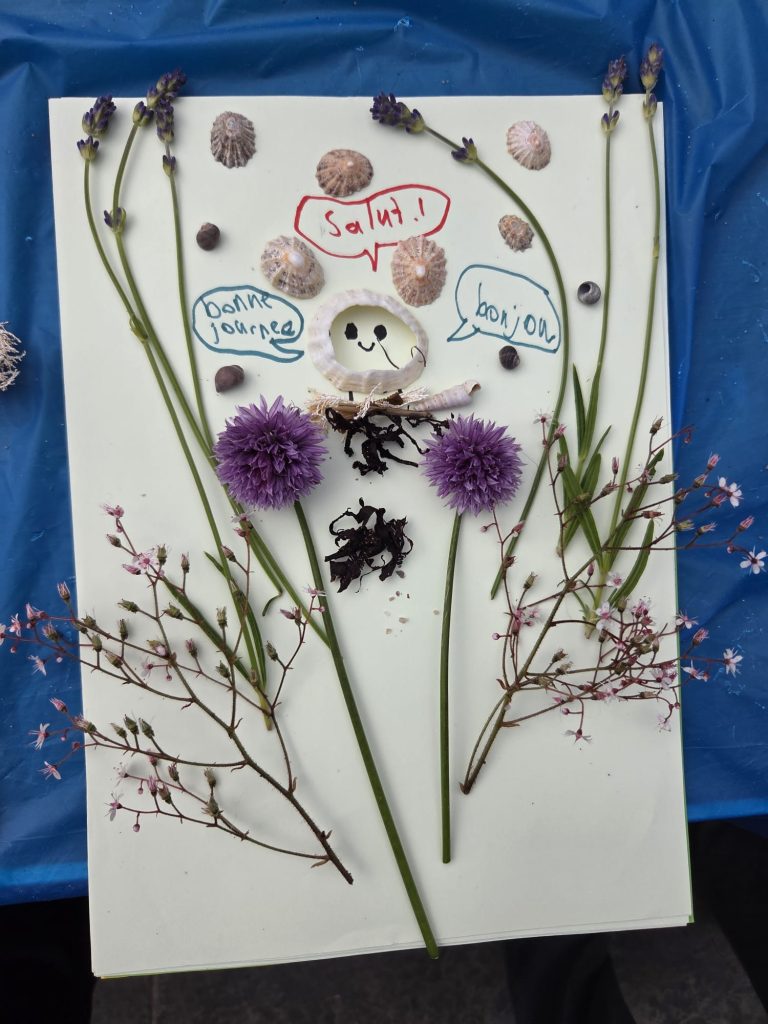
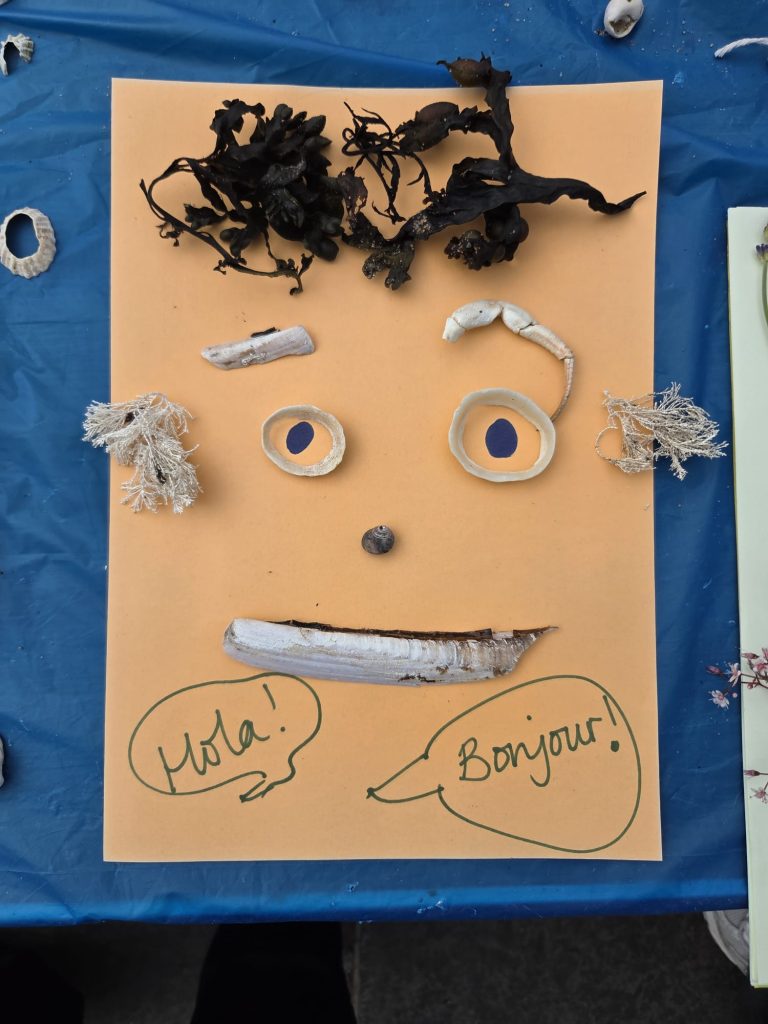
This tactile activity encouraged participants to slow down, observe textures, and let their imaginations take over. Each beastie was completely unique, reflecting the creativity of its maker while sparking conversations about naming, describing, and storytelling in various languages. These included French, Japanese, Greek, Arabic, Russian, Polish, Swahili, Bajan, Kikuyu, Scots, Spanish, Tigrinya, Mandarin, Cantonese, Scots, Hindi and BSL.
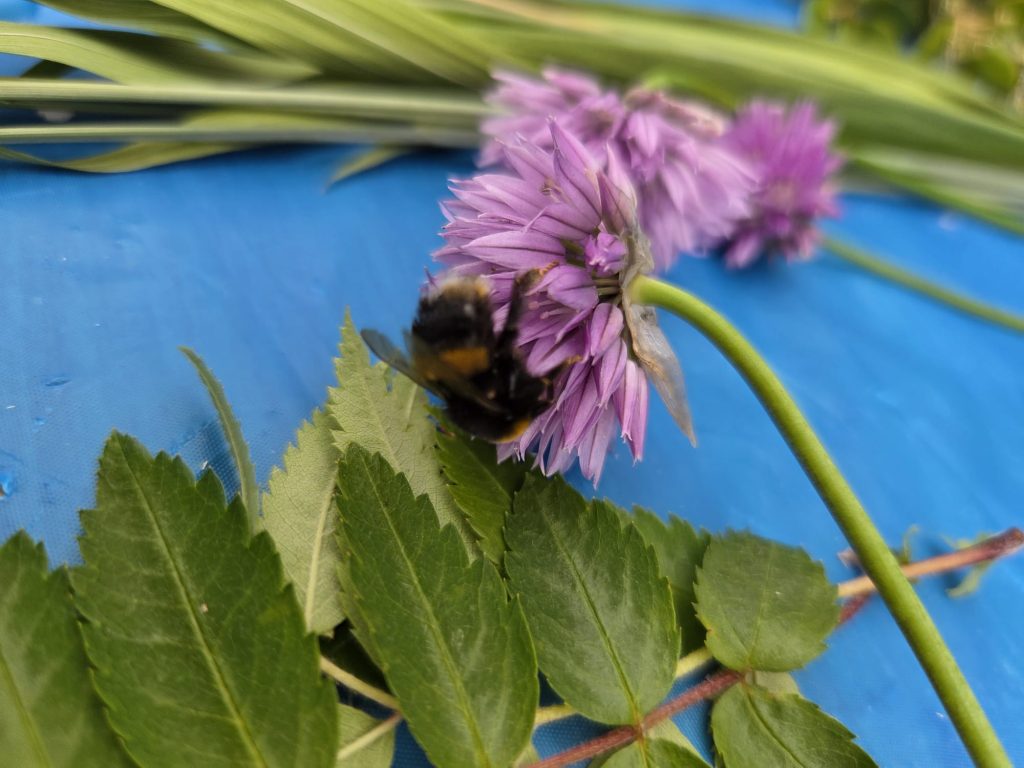
And talking of braw beasties, we were graced with the presence of several bumble bees at our stall. One very curious bumblebee buzzed around, listening to conversations, tasting the flowers. We decided to declare our wee friend as the ‘bee artist in residence’, as our table became a place of sanctuary, replenishment and creativity. ‘I’m not a flower!’ said one of the children who was creating their artwork as the friendly bumblebee hovered around, just a wee bit too closely for her!
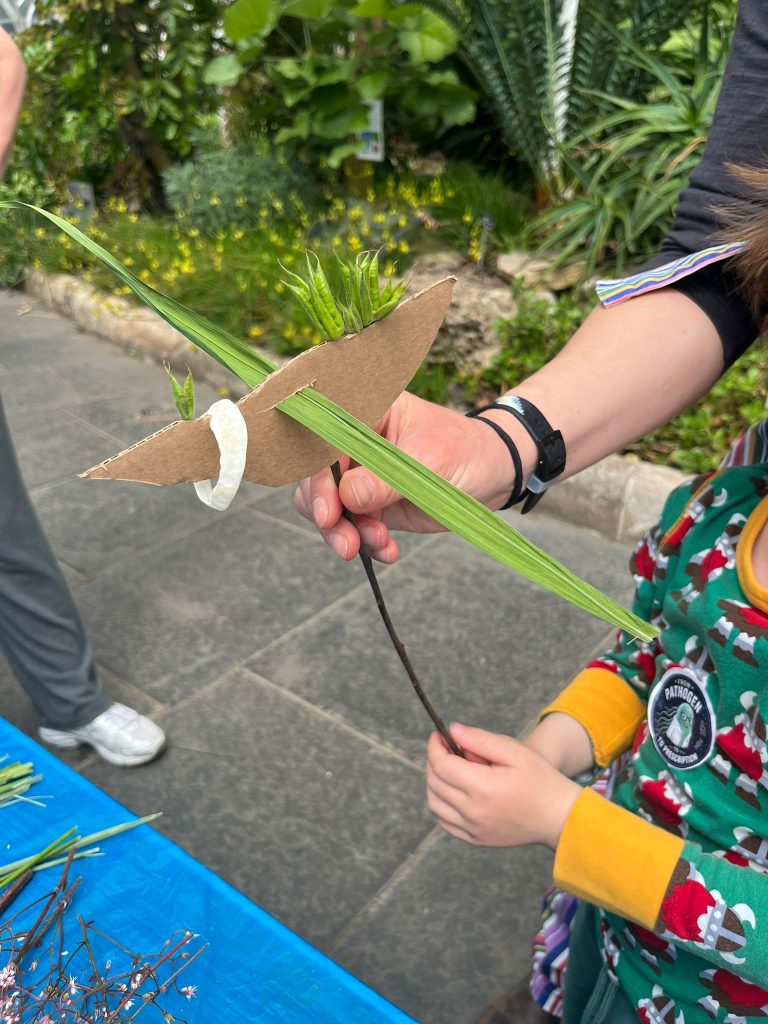
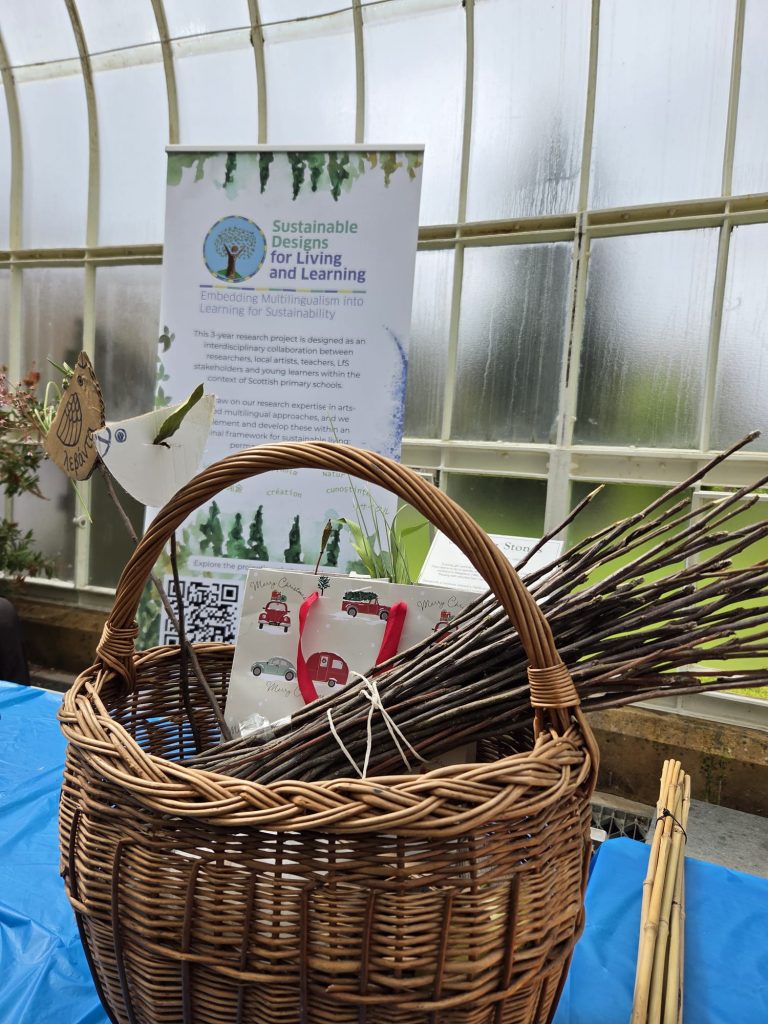
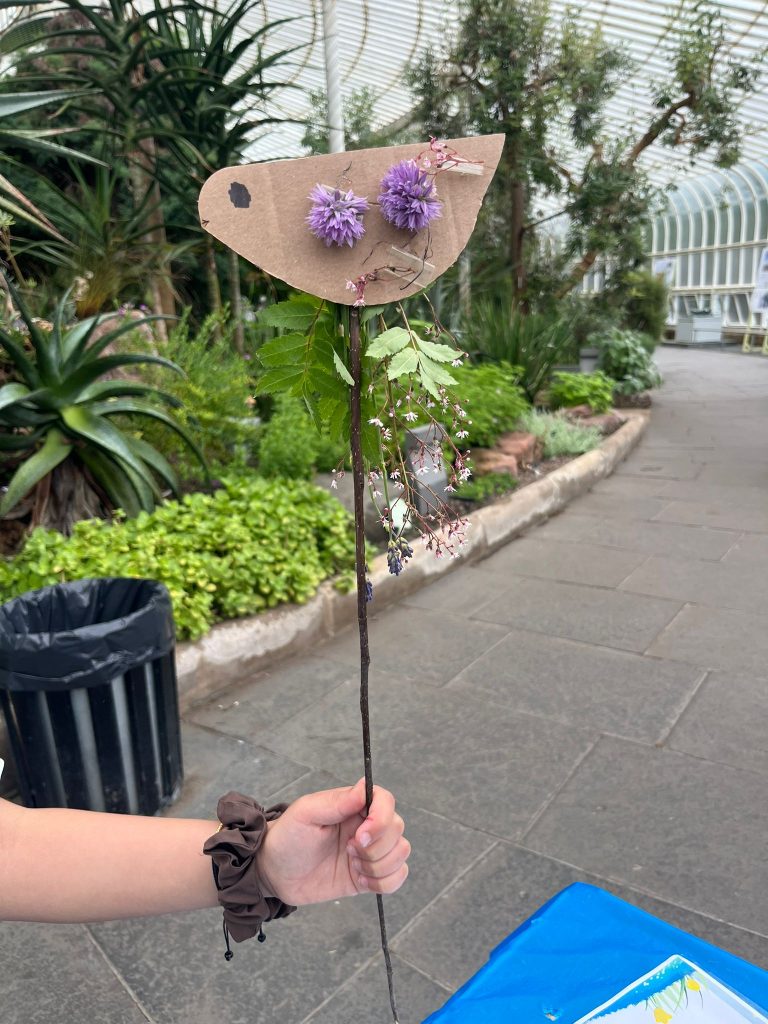
Our second table-top activity, “The Journey of a Bird,” proved equally popular, especially with younger visitors. This creative station invited children to design and build their own birds using corrugated card, twigs, and a selection of natural materials. The process of assembling their birds was immersive and joyful. From choosing wings and shaping bodies to adding natural textures and features, participants brought their feathered creations to life with enthusiasm and care.
What made this activity particularly meaningful was the idea behind it. Each bird represented a journey; a symbol of travel, discovery, and new linguistic adventures. As children proudly carried their birds away with them, the activity became more than just a craft; it was a starting point for imagining the languages, cultures, and places their birds (and they themselves) might encounter.
For many, this sparked conversations about:
- Where their bird might fly
- What languages it might hear or speak
- The stories it might gather along the way
It was wonderful to see children connecting creativity with movement, language, and exploration—taking a small ‘seed of language’ home with them.
Both activities created natural opportunities for linguistic exploration. Participants were encouraged to:
- Name their beasties or birds in any language they wished
- Describe their creations’ personalities and habitats
- Share stories inspired by their designs
These moments of playful interaction often led to impromptu language sharing, intergenerationally exchanging words, phrases, and ideas across cultures. It was especially inspiring to see children confidently experimenting with language, switching between languages or inventing their own.
What stood out most was the sense of wonder and connection that emerged throughout the day. Whether it was a child proudly presenting their creation, a family working together on a design, or strangers bonding over unusual materials, our stall became a space for creativity, curiosity, and shared discovery. The use of natural materials, particularly those gathered from Bute, added a sensory and storytelling dimension that grounded the experience in place and memory. Even the smallest, most unexpected objects became gateways to learning and imagination.
Our time at the Glasgow Science Festival 2026 reaffirmed the power of creative, hands-on approaches to language engagement. By blending art, nature, and storytelling, we can make languages inclusive, accessible, and deeply enjoyable. We are incredibly grateful to everyone who visited our stall and helped bring “Sowing Seeds of Languages” to life. The seeds have been planted, and like the journeys of our handmade birds, we look forward to seeing how they take flight in the future
Our artist bee in residence returned regularly to feast on our chive and lavender flowers and even when we had packed up and were just about to leave it was still there in search of a yummy food source but sadly it was time for us to leave, until next year!