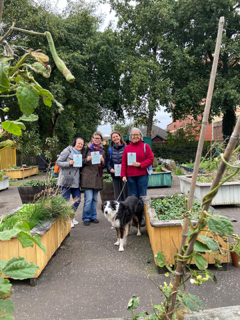
Year 2 of the SDLL project is now in full swing, and we are delighted to welcome nine new schools to our growing SDLL community. Joining the project this year are Rowantree Primary School (Dundee), St Cyrus Primary School (Aberdeenshire), St Patrick’s Primary School (North Lanarkshire), Bridge of Allan Primary School (Stirling), Leith Walk Primary School (City of Edinburgh Council), Rosewell Primary School (Midlothian), Cullivoe Primary School (Shetland), Moffat Primary School (Dumfries and Galloway), and Kilchuimen Primary School (Highland). With the addition of these schools, the SDLL network continues to expand, creating even more opportunities to explore and celebrate languages and multilingualism across Scotland!
In September, we held our first professional learning workshop for all schools involved in the project. The workshop was titled Growing Multilingual Classrooms and focused on developing an understanding of multilingualism and the many benefits it can bring to learners, schools, and communities. We were privileged to welcome Professor Antonella Sorace from the University of Edinburgh, founder of Bilingualism Matters, who shared insights from her extensive research in the field. Her presentation provided a valuable theoretical foundation, highlighting the cognitive, educational, and social advantages associated with multilingualism.
However, understanding the theory is only one part of the journey. A key focus of the workshop was exploring how multilingualism can be recognised and celebrated in everyday classroom practice. Teachers were introduced to the concept of language portraits as a powerful tool for encouraging learners to reflect on and share their linguistic identities. The session also provided an opportunity for teachers to create their own language portraits, prompting reflection on their personal language experiences and identities. It was wonderful to see colleagues enthusiastically engage with the activity, with several teachers choosing to share their portraits and stories with the wider group.
We are excited to continue working with all our 12 schools and are in the process of planning visits to each of our new schools after the October break. We are also planning for second workshop on multilingualism, due to take place at the end of October, and this session will focus on the use of arts-based methods as a vehicle to explore multilingualism. Lots of exciting things coming up so keep up to date with all the SDLL news on our Instagram.
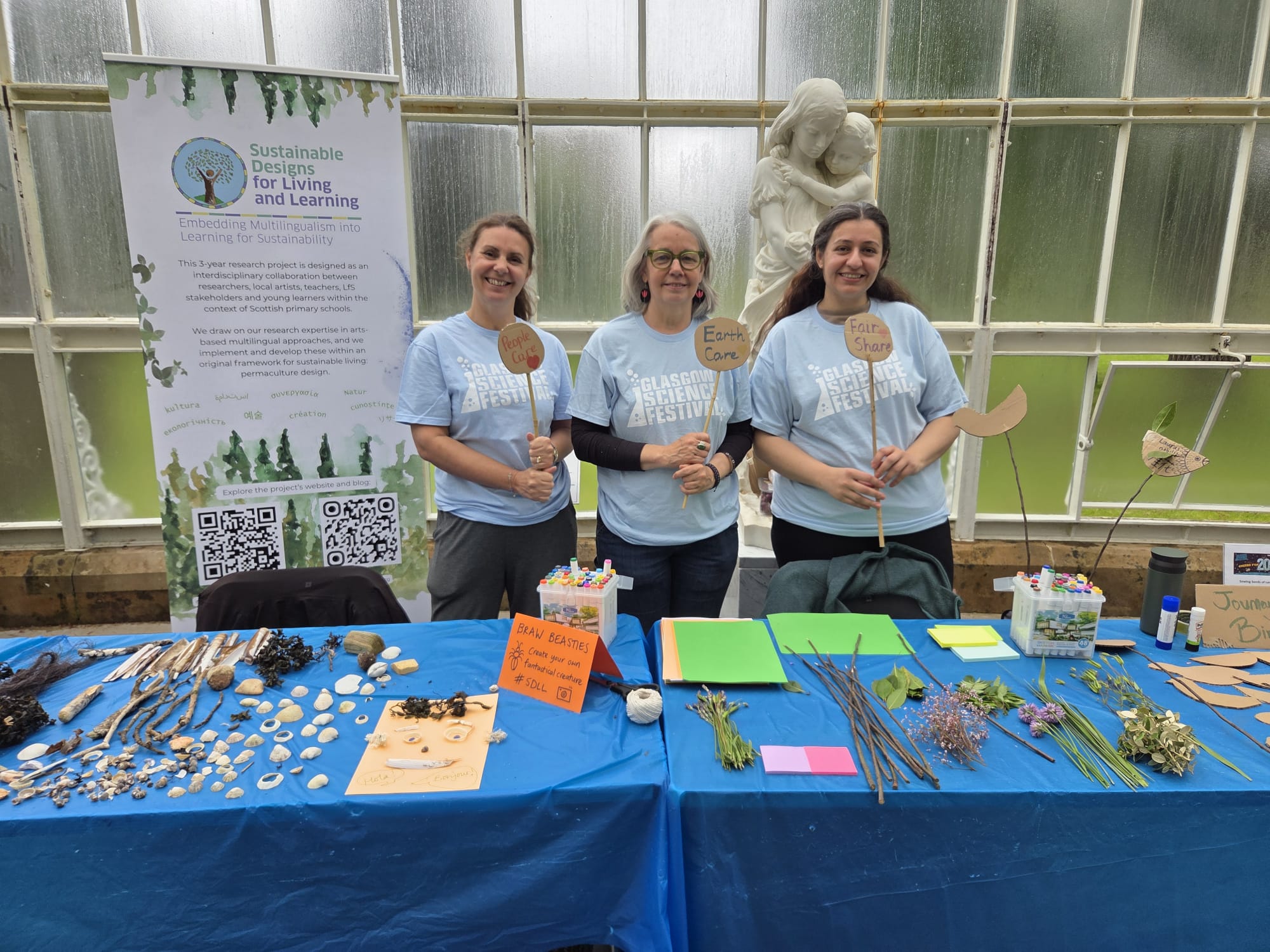
The SDLL team was delighted to take part in this year’s Glasgow Science Festival, hosting a vibrant and welcoming stall in the beautiful surroundings of the Botanic Gardens in Glasgow’s West End. Nestled among the greenery, glasshouses, and curious minds of all ages, our theme, “Sowing Seeds of Languages”, captured both the spirit of the festival and our passion for nurturing linguistic curiosity alongside nature in creative and engaging ways.
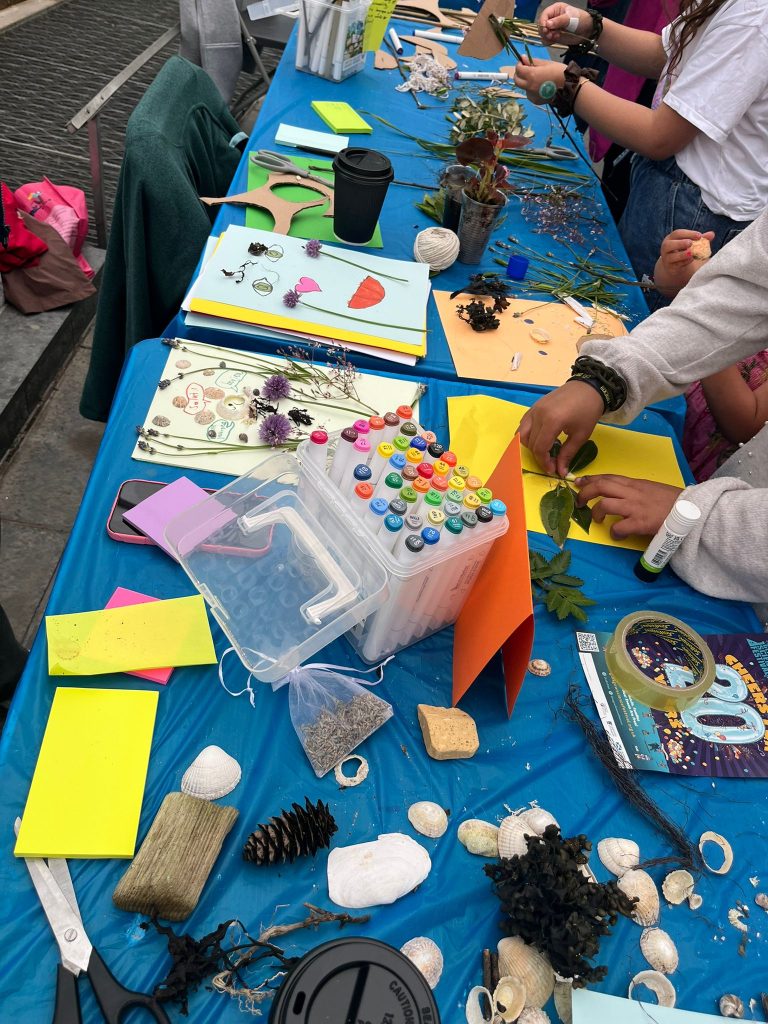
Throughout the day, we were thrilled to welcome children, families, and visitors from across the globe. The diversity of languages, accents, and cultural perspectives brought an extra layer of richness to our stall. Conversations flowed freely, not only in English, but in many different languages, with one of our 6-year-old participants conversing in 4 languages (French, Dutch, Russian and English) with members of the SDLL team and her family! Our tabletop activities aimed to show that languages can be playful, creative, and rooted in shared experiences. By combining language with art, nature, and storytelling, we encouraged participants to explore how communication goes far beyond words alone. Using 3 ethics of permaculture, Earth Care, People Care and Fair Share, sticks, pens and plants were gathered and set on the table to explore languages and discuss the importance of our project.
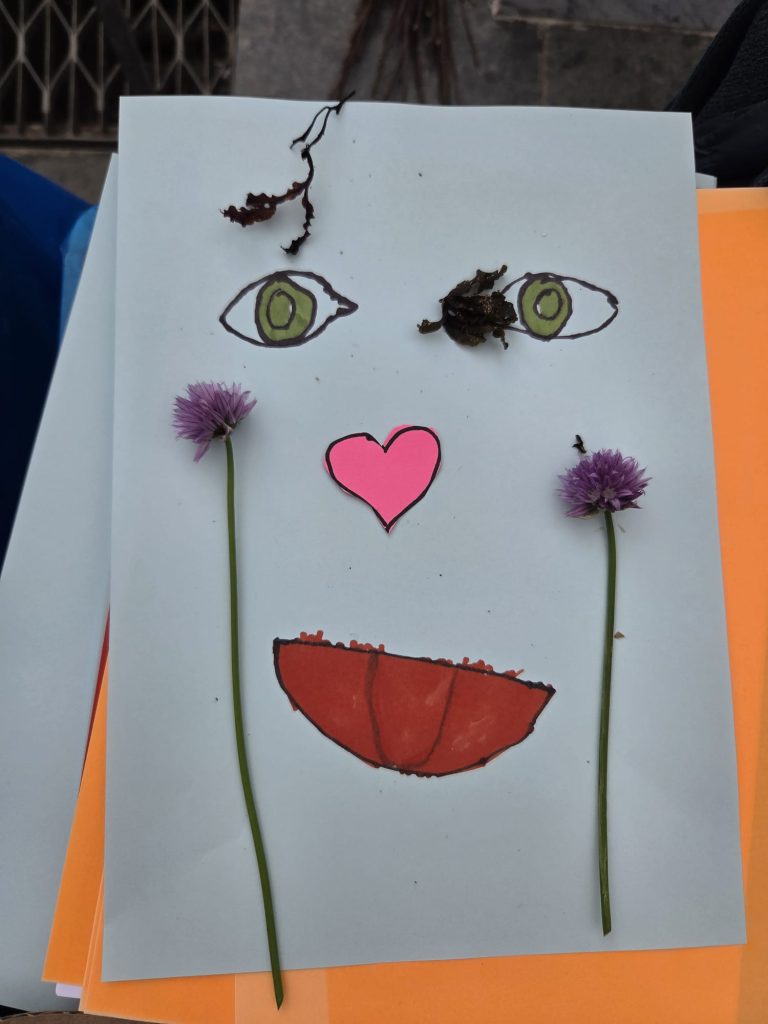
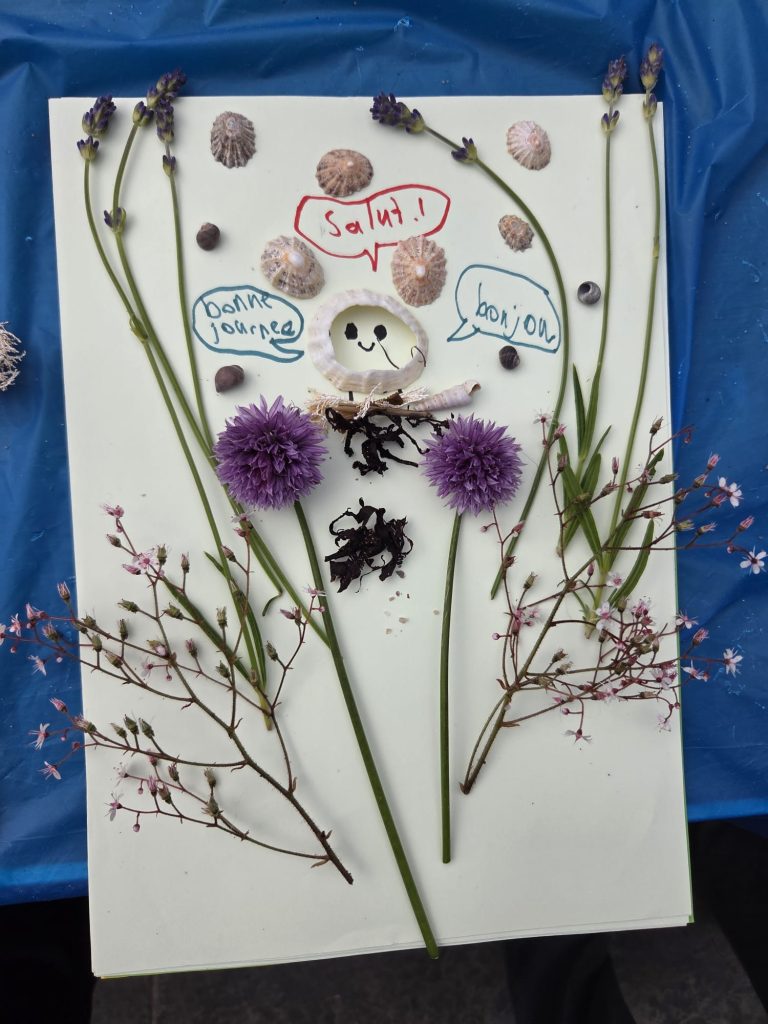
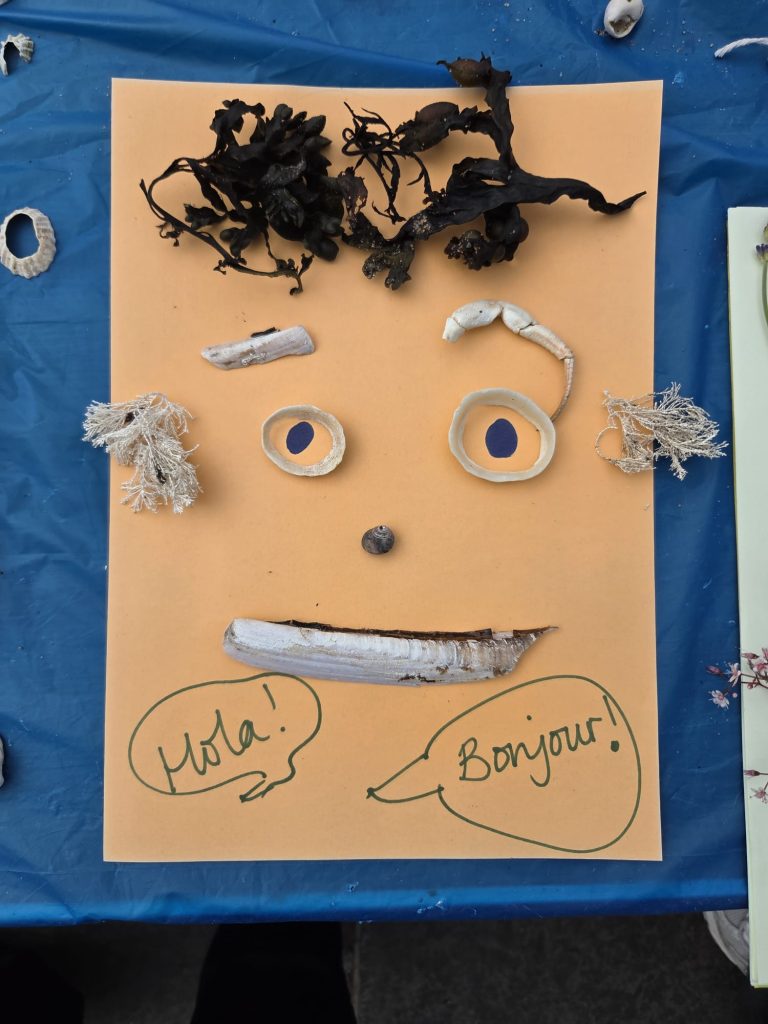
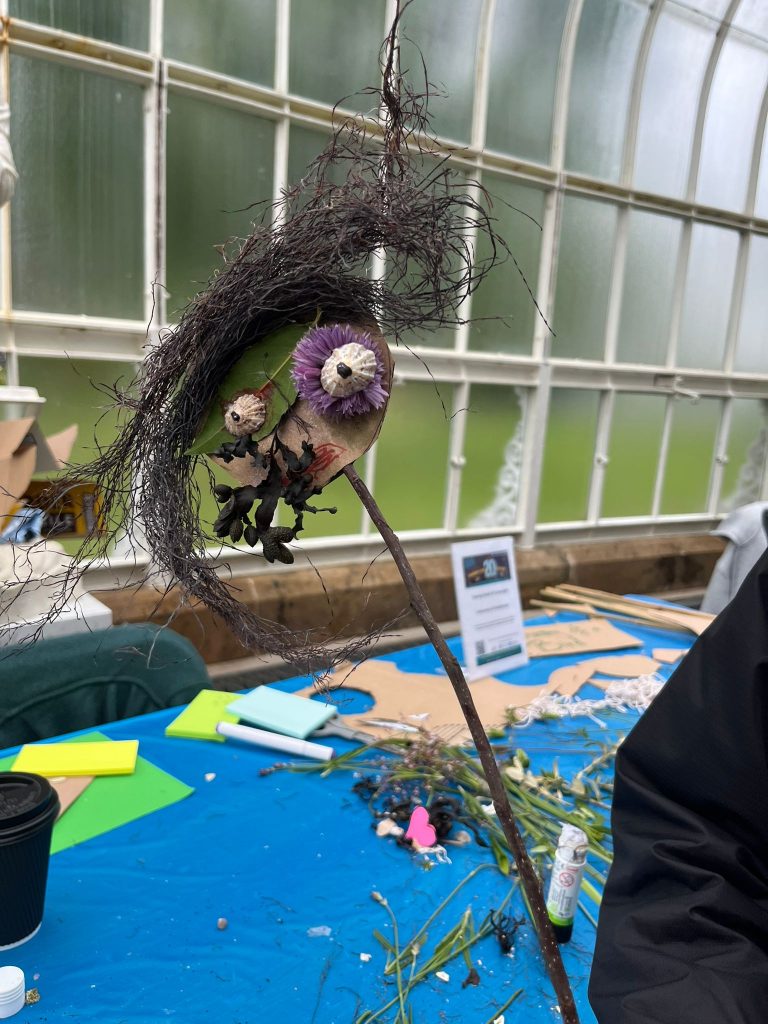
One of the standout activities at our stall invited participants to get hands-on with natural materials and create their own “braw beasties”, a delightful Scots term meaning “fine” or “wonderful” creatures. Using a rich variety of materials, children and adults crafted imaginative creations from:
Vegetation such as chive flowers, lavender stalks,
London pride, all hand-picked from Jane’s garden
Seaweed and shells gathered on the beaches of Bute
Pebbles of all shapes and sizes
And even… a tiny creature’s skull, which sparked both curiosity and excitement from adults and children alike! Well done to the young participant who identified this as a duck skull and plans to study veterinary science.
This tactile activity encouraged participants to slow down, observe textures, and let their imaginations take over. Each beastie was completely unique, reflecting the creativity of its maker while sparking conversations about naming, describing, and storytelling in various languages. These included French, Japanese, Greek, Arabic, Russian, Polish, Swahili, Bajan, Kikuyu, Scots, Spanish, Tigrinya, Mandarin, Cantonese, Scots, Hindi and BSL.
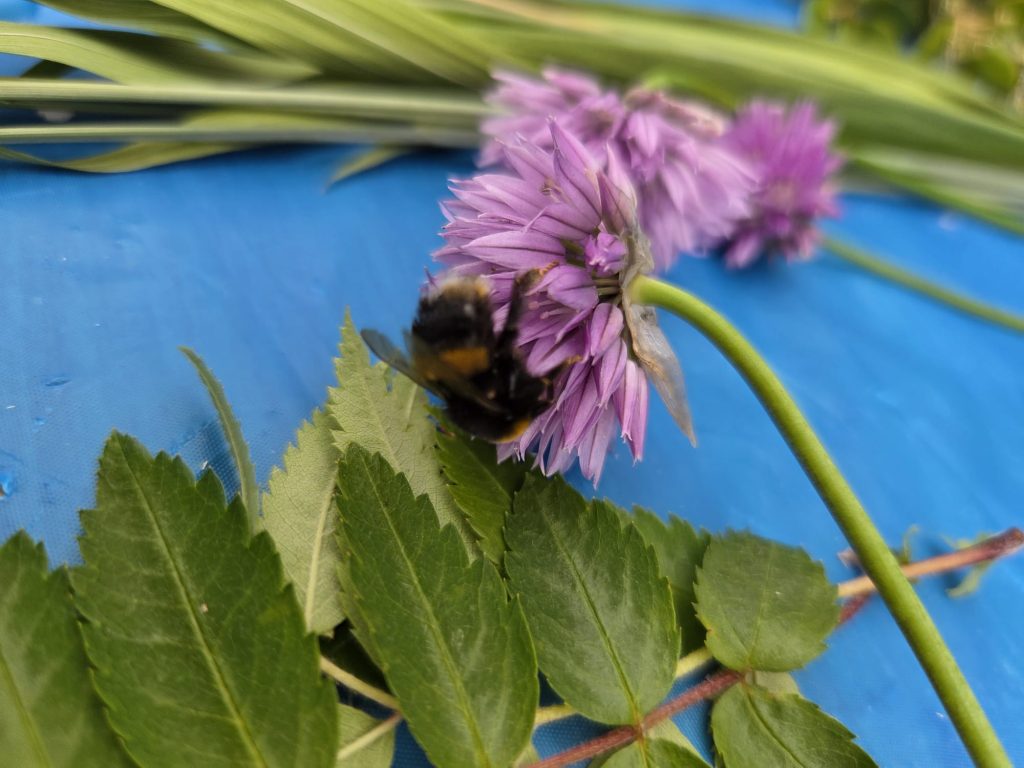
And talking of braw beasties, we were graced with the presence of several bumble bees at our stall. One very curious bumblebee buzzed around, listening to conversations, tasting the flowers. We decided to declare our wee friend as the ‘bee artist in residence’, as our table became a place of sanctuary, replenishment and creativity. ‘I’m not a flower!’ said one of the children who was creating their artwork as the friendly bumblebee hovered around, just a wee bit too closely for her!
Our special bee artist in residence!
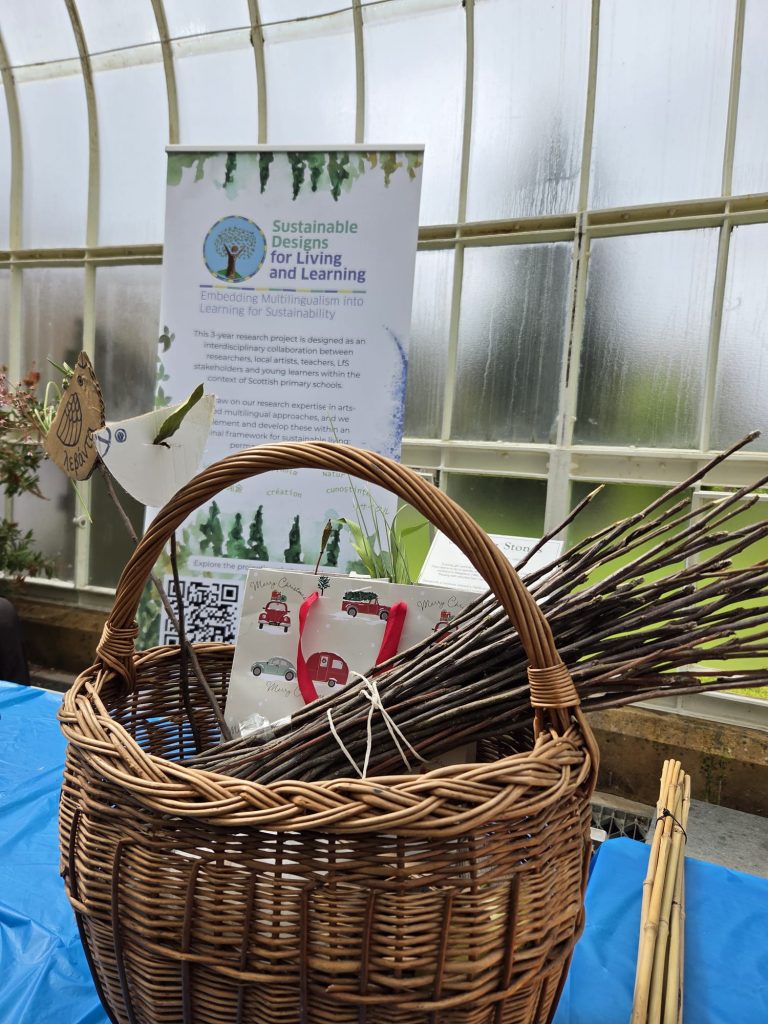
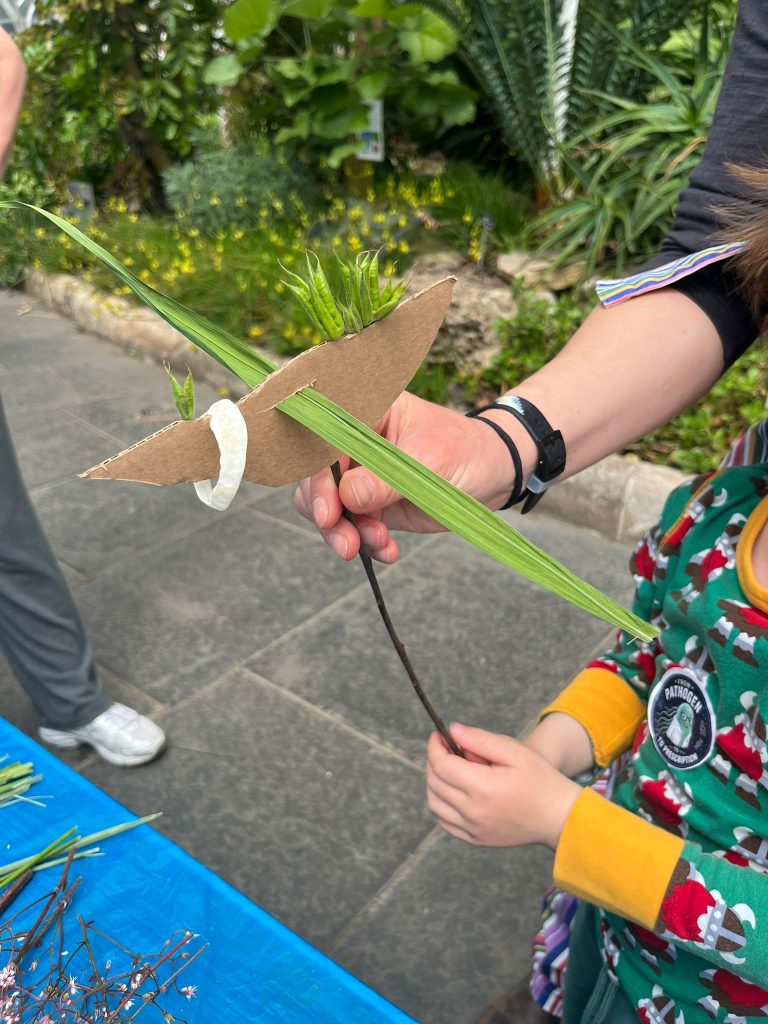
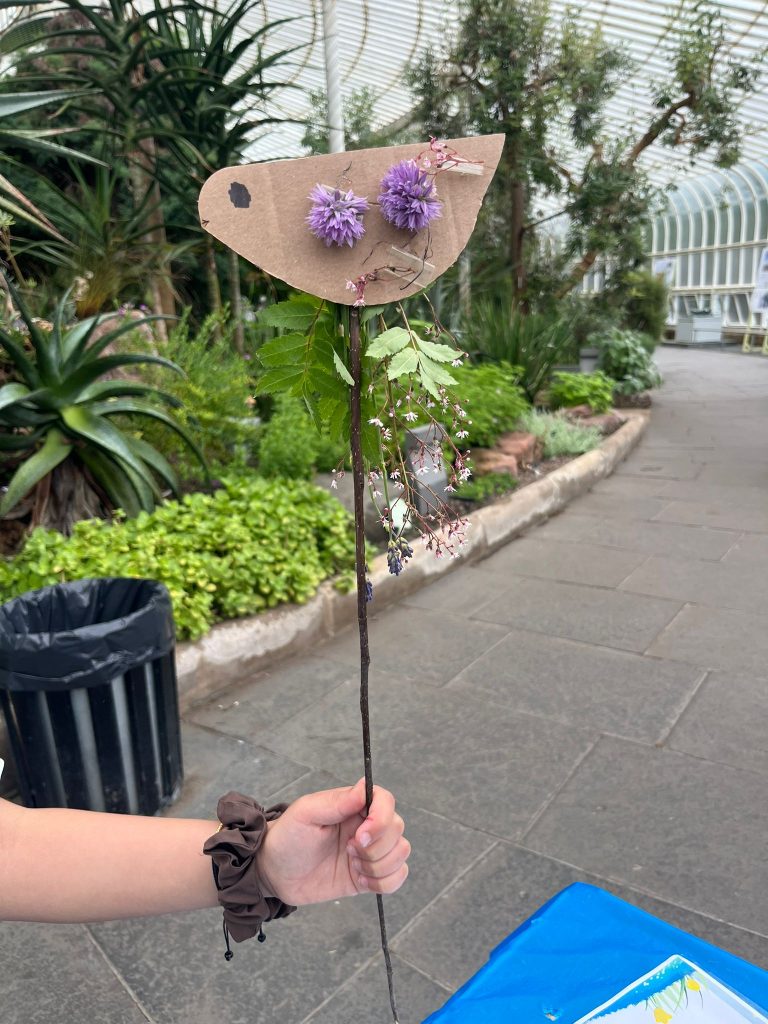
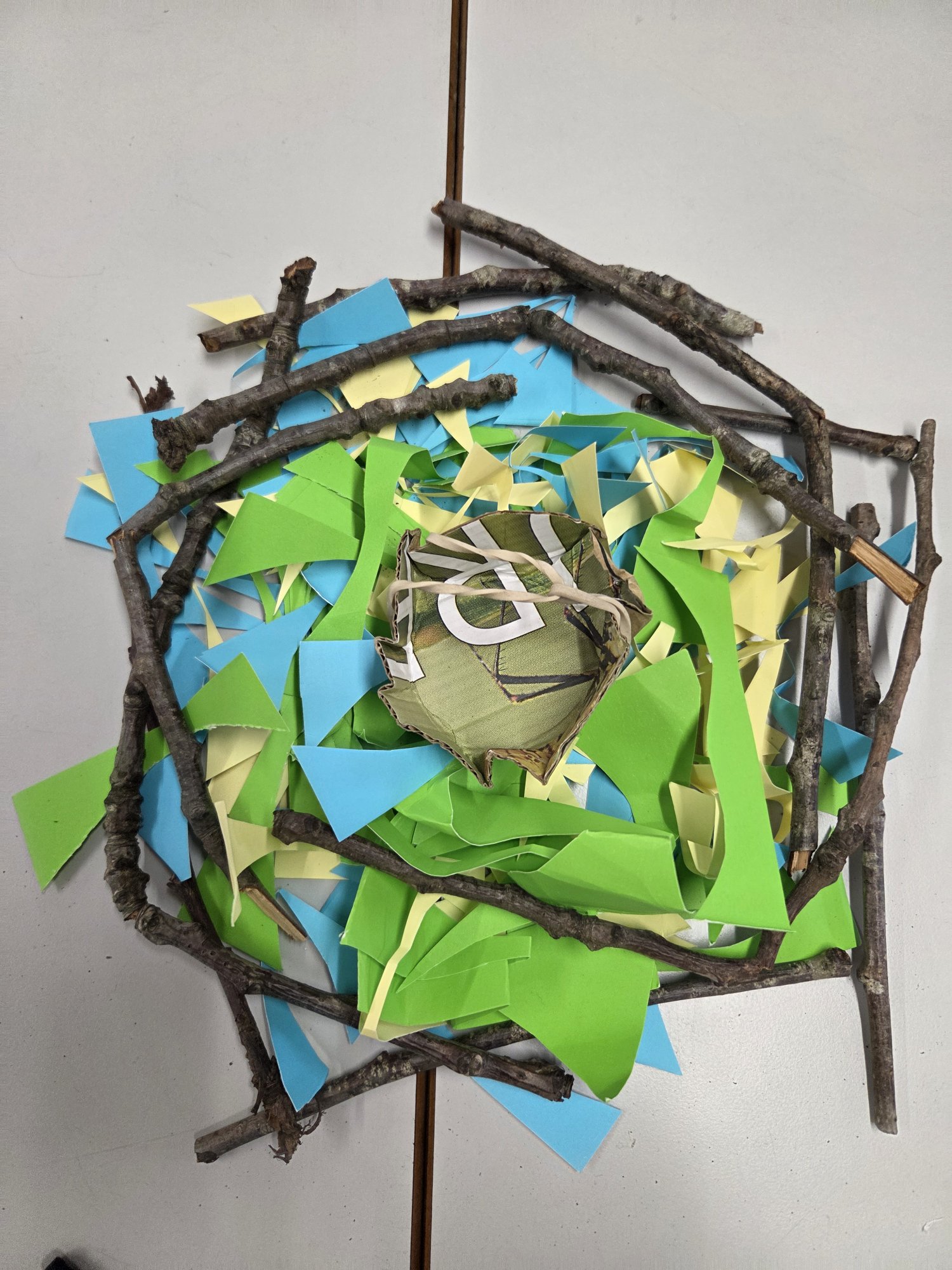
Our second table-top activity, “The Journey of a Bird,” proved equally popular, especially with younger visitors. This creative station invited children to design and build their own birds using corrugated card, twigs, and a selection of natural materials. The process of assembling their birds was immersive and joyful. From choosing wings and shaping bodies to adding natural textures and features, participants brought their feathered creations to life with enthusiasm and care.
What made this activity particularly meaningful was the idea behind it. Each bird represented a journey; a symbol of travel, discovery, and new linguistic adventures. As children proudly carried their birds away with them, the activity became more than just a craft; it was a starting point for imagining the languages, cultures, and places their birds (and they themselves) might encounter.
For many, this sparked conversations about:
Where their bird might fly
What languages it might hear or speak
The stories it might gather along the way
It was wonderful to see children connecting creativity with movement, language, and exploration—taking a small ‘seed of language’ home with them.
Both activities created natural opportunities for linguistic exploration. Participants were encouraged to:
Name their beasties or birds in any language they wished
Describe their creations’ personalities and habitats
Share stories inspired by their designs
These moments of playful interaction often led to impromptu language sharing, intergenerationally exchanging words, phrases, and ideas across cultures. It was especially inspiring to see children confidently experimenting with language, switching between languages or inventing their own.
What stood out most was the sense of wonder and connection that emerged throughout the day. Whether it was a child proudly presenting their creation, a family working together on a design, or strangers bonding over unusual materials, our stall became a space for creativity, curiosity, and shared discovery. The use of natural materials, particularly those gathered from Bute, added a sensory and storytelling dimension that grounded the experience in place and memory. Even the smallest, most unexpected objects became gateways to learning and imagination.
Our time at the Glasgow Science Festival 2026 reaffirmed the power of creative, hands-on approaches to language engagement. By blending art, nature, and storytelling, we can make languages inclusive, accessible, and deeply enjoyable. We are incredibly grateful to everyone who visited our stall and helped bring “Sowing Seeds of Languages” to life. The seeds have been planted, and like the journeys of our handmade birds, we look forward to seeing how they take flight in the future
Our artist bee in residence returned regularly to feast on our chive and lavender flowers and even when we had packed up and were just about to leave it was still there in search of a yummy food source but sadly it was time for us to leave, until next year!
It is well known that bringing nature into the curriculum has many positive impacts on children and their school communities. Our project, Sustainable Designs for Living and Learning, weaves nature into the fabric of learning and integrates principles of permaculture design as a holistic approach to learners’ growing knowledge of the world.
Drawing on this general vision of our project, on April 25, 2026, Kirsten Irvine and Jack Field, two teachers from West Primary School, led a pilot project and shared findings from their work with Primary 1 and Primary 6 classes. Their poster was introduced as part of the Research making a difference in the classroom: BERA Teacher Conference– an event which aimed to highlight the importance and innovative work emerging from teacher-researcher partnerships. The conference event brought together a wide group of practitioners and education stakeholders interested in learning from each other’s work. Other projects featured focused on a wide range of topics such as the growing impact of AI, using VR Digital Content Creation, work life experiences of black female teaching assistants, metacognition in the English secondary classrooms, and working in rural areas.
Our team from the SDLL project shared the experiences of their classes where being with nature had significant impact on children’s wellbeing, their collaborative skills, and language learning which all led to increased attainment. Kirsten and Jack used “vertical learning” as a way to encourage deeper engagement with knowledge among younger and older children. Activities such as den building were enriched with words shared by learners of different linguistic backgrounds. Being outdoors also meant that some children had opportunities for the first time to touch and play with soil in intentional ways. This pilot project was grounded in the three permaculture principles of earth care, fair share and people care which shift teachers’ investment from children’s behaviour to activities that enable pupils to be seen, listened to and valued for everything that they have to contribute to their environments. This is the beginning of work that heals, of a pedagogy that cares for the whole child, and the development of a teacher sensitivity towards holistic learning. You can access the team’s poster on the project Resources page.
Jane and Pinar visited WPS to work alongside Mrs. Paterson, and class representatives from Nursery through to P7 as part of preparations for the upcoming Carnival of Cultures.
We gathered in the music room, where children from across the school had been invited to take part. Mrs. Paterson explained that, rather than selecting members through the Pupil Council, children who had shown enthusiasm for the Carnival of Cultures project had been chosen to represent their classes.
To begin the session, we played the “Seaweed Game”, encouraging everyone to use their bodies and imagination to feel as though they were seaweed swaying at the bottom of the ocean. This activity helped create a relaxed atmosphere and encouraged participation from all age groups.
Following this, each child introduced themselves by sharing their name and class. We then revisited the Carnival of Cultures project, with Mrs. Paterson reminding everyone about the purpose of the event and explaining that the group would create something to showcase their learning and experiences on the day. The children reflected on some of the activities they had taken part in throughout the SDLL project, including storytelling about birds, clay work, plant-based activities, and logo design. Their enthusiasm highlighted the variety of creative experiences they had enjoyed.
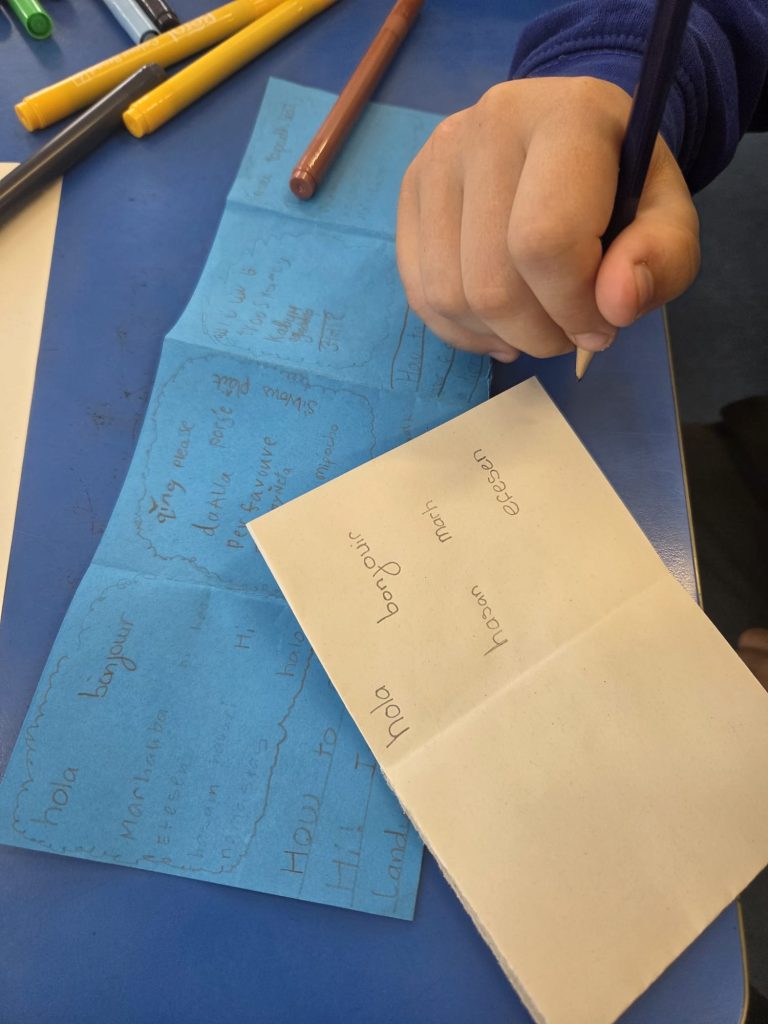
Using a children-led approach, we then invited the children to think about what could be done as it was important that the ideas were coming from the children. After some collaborative brainstorming, an exciting idea began to emerge. One child suggested creating a boat, which prompted us to ask what they would like to place inside it. Another child proposed filling the boat with letters containing different messages. This connected perfectly with a multilingual zine that the Pupil Council had previously created which came after sharing ideas about how to document languages spoken at West PS. The children suggested using the zine as inspiration for writing words and messages in different languages.
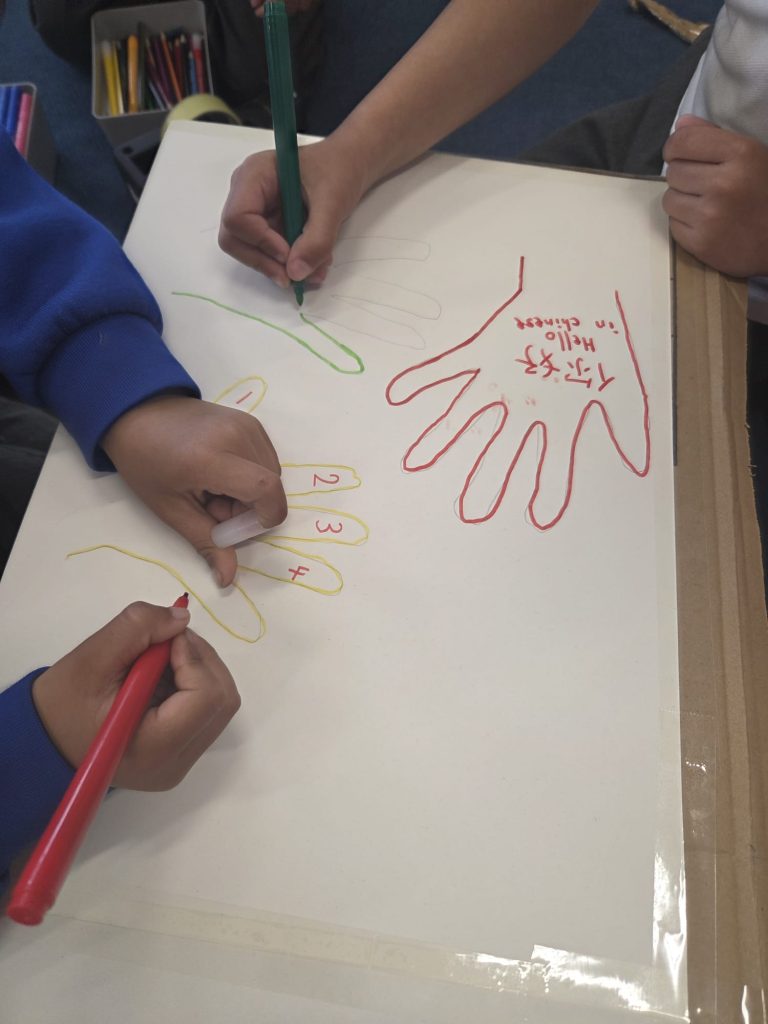
Building on this idea, they decided that the letters could include writing, drawings, and colourful designs, celebrating the diversity of languages and cultures represented within the school community. The group also agreed that the boat itself should be decorated, and children quickly gathered scissors, paper, pens, glue, and other craft materials to begin bringing their vision to life.
Soon, the room was buzzing with activity. Some children focused on creating and decorating the letters, while others worked together to design and decorate the boat. We supported one of the children to write and deliver a speech at the Carnival of Cultures by reading over the text and confirming details via email. At the end, everyone agreed to finish decorating the boat, writing the letters, and on the day, everyone gave out the letters as a speech was being delivered. Letters included sharing messages and words from different languages and cultures handed to parents.
The session demonstrated the power of collaborative creativity and highlighted how children can develop meaningful ideas when given the opportunity to shape projects themselves.
Lavinia, Dobrochna and Jane arrived in the West on the day of the Carnival. We were immediately blown away by the energy the school was buzzing with. The SDLL logo exhibition was set up by the entrance to the hall, hospitality stalls set by parents in the hall overflew with mouth-watering food and there was delicious Syrian coffee generously shared with tired parents and staff members alike – we fell in love and strictly followed the permaculture principle of no waste!
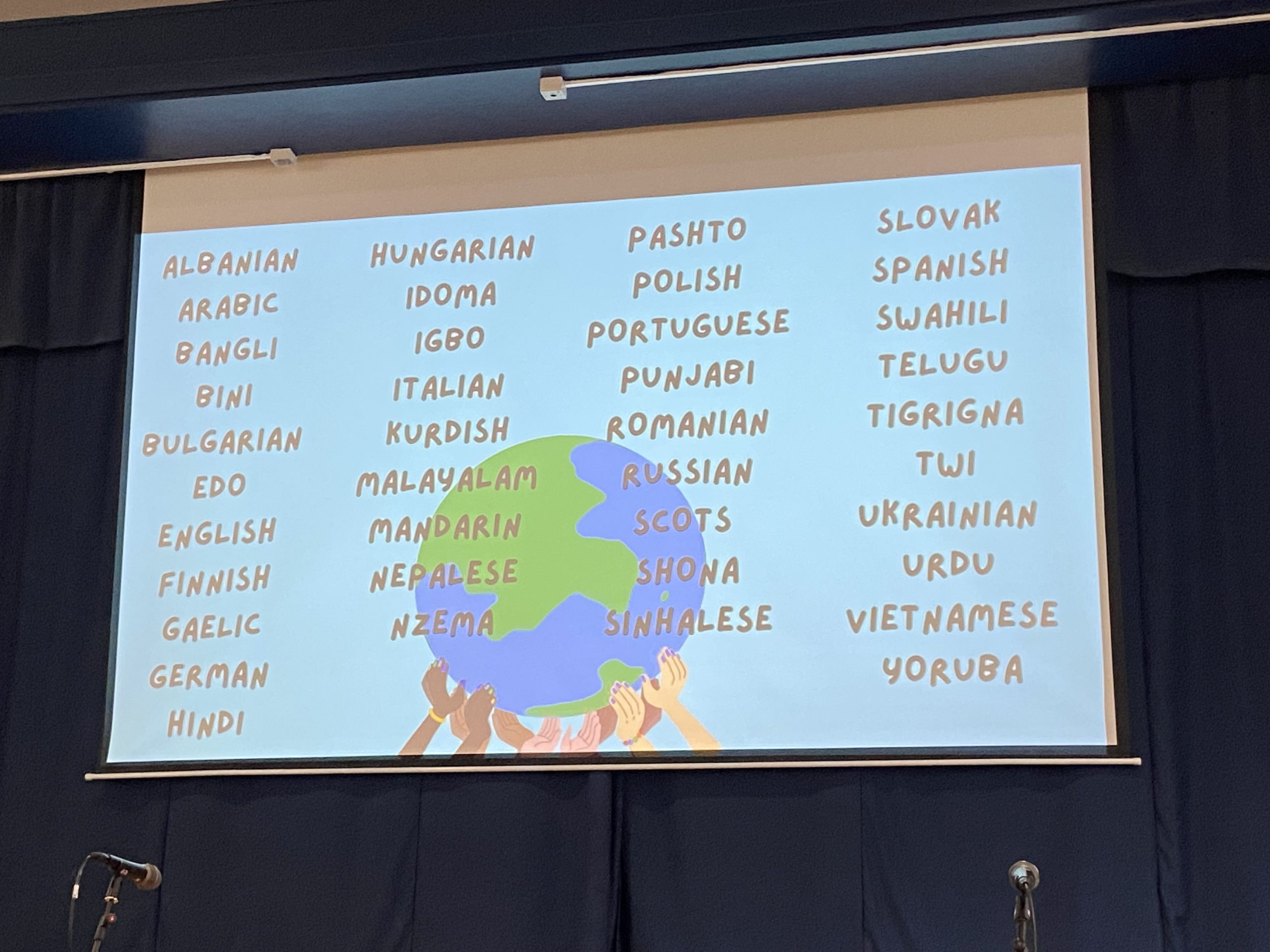
This was only the beginning: when parents and younger siblings filled all the chairs in the hall, the event started. On the stage recorded videos alternated with live performances, we witnessed children introducing themselves in a variety of languages including English, Gaelic, Arabic, Romanian, Scots, Polish, French and many more in all-encompassing way – languages taught, spoken in the community, signed, learned were all there sitting next to each other, complementing each other, supporting the acts. It was such a joy to witness. Class after class, year after year children were coming to the stage singing, dancing, playing instruments, speaking poetry, presenting the boat (of course!) and sharing some written messages with the audience members – diverse cultural themes more or less tightly interwoven in the act of art making. Some children were wearing uniforms, some were dressed in traditional cultural dresses, some playfully danced with the carnival theme and school rules – dressed more or less casually with a meaningful element added – a scarf, a skirt, a hairband that hinted at some cultural meaning in a nonchalant, momentarily, flickering way young people often do when they are given a freedom of expression. The richness of mediums, modalities and languages was breathtaking, in the world scared of scarcity we witnessed a carnival of abundance. The event ended with a parade of costumes led by a teacher who played the bagpipes followed by a colorful line of carnivalists dressed in costumes in all colours and shapes. We left with our hands hurting from clapping, teary eyes and cups of coffee in our hands. West really is the Best.
We were delighted to offer a workshop at the UNESCO REILA Spring School 2026. This was developed from the Permaculture ethics of ‘Earth Care, People Care, and Fair Share’. This was a wonderful opportunity to share what we had learned from working with the children involved in our SDLL project.
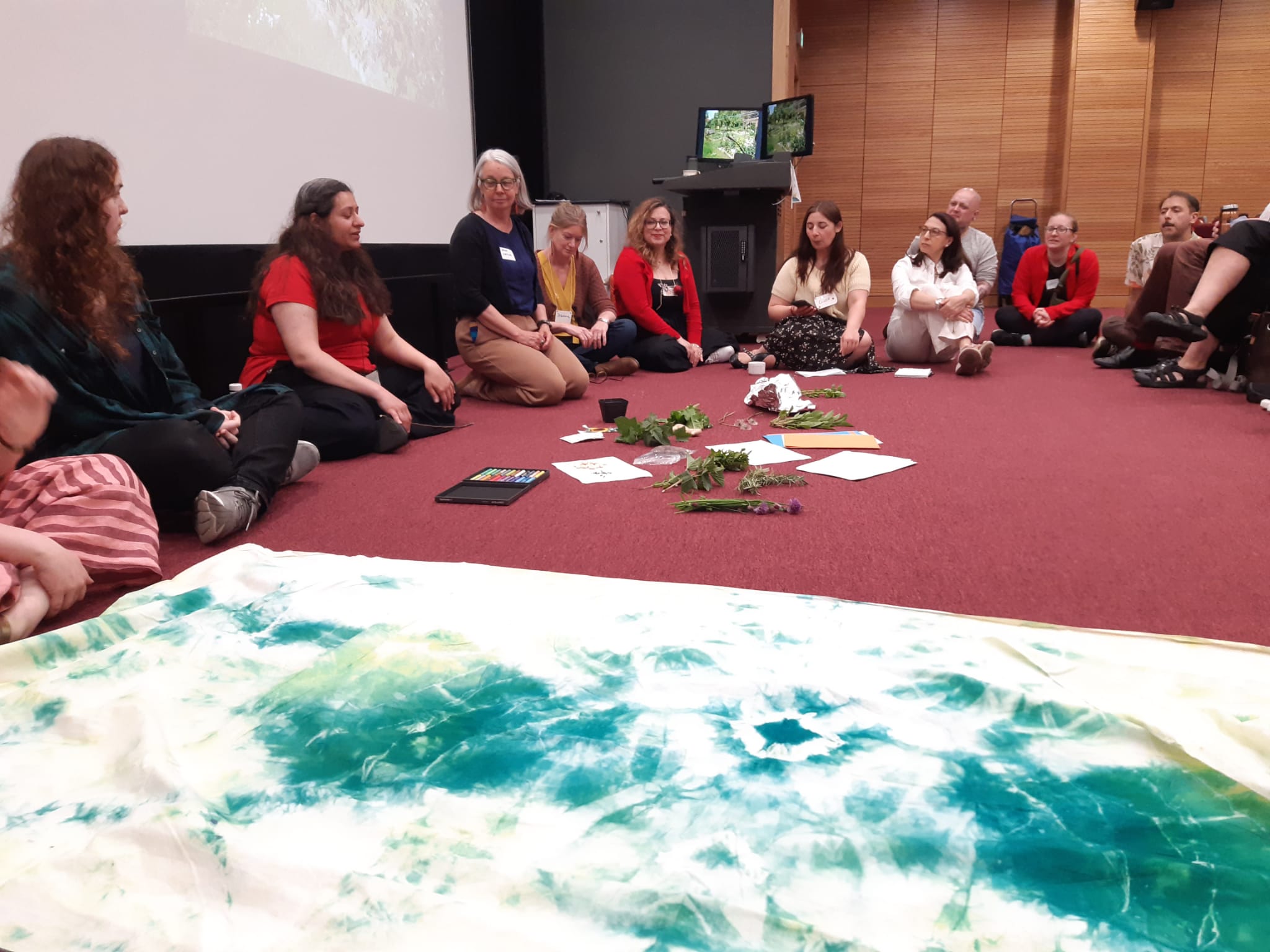
During the workshop we invited participants to interact with a range of common plant-based materials and ask what memories and associations are evoked by these. Plants have their own migration stories which are entwined with the history of human movement patterns across the planet. Humans and plants are literally and metaphorically rooted in the local ecology; however, they are also simultaneously in constant motion and movement through time and space. By sharing plant knowledge, naming, and making connections, we offered a context to explore language and cultural perspectives which draw on these shared histories, including our commonalities and differences. How do plants connect us to a place, a person, or a time in our life? This thinking builds on our learning from our project ‘Sustainable Designs for Living and Learning: embedding multilingualism into learning for sustainability’.
The workshop began with participants sitting in a circle and a warm welcome to the session. This is followed by an energising icebreaker led by Pinar called “This is Not a Stick,” where a simple stick is passed round the group and transformed into something else through creativity, and storytelling. A golden thread of connection is created around the room as the stick is passed on, pondered with, and transformed through the power of imagination. The activity engaged everyone playfully and creatively, setting the tone for the session ahead.
“This is not a stick…this is a portal into a different universe”
“This is not a stick….this is Harry Potter’s wand”
“This is not a stick… this is violin bow”
Jane and Pinar then introduced the three-permaculture ethics – People Care, Earth Care, and Fair Share – and discuss how these principles underpin the project. The discussion highlighted how sustainability extends beyond environmental concerns where nature might be othered, to include human cultural diversity, language and community wellbeing.
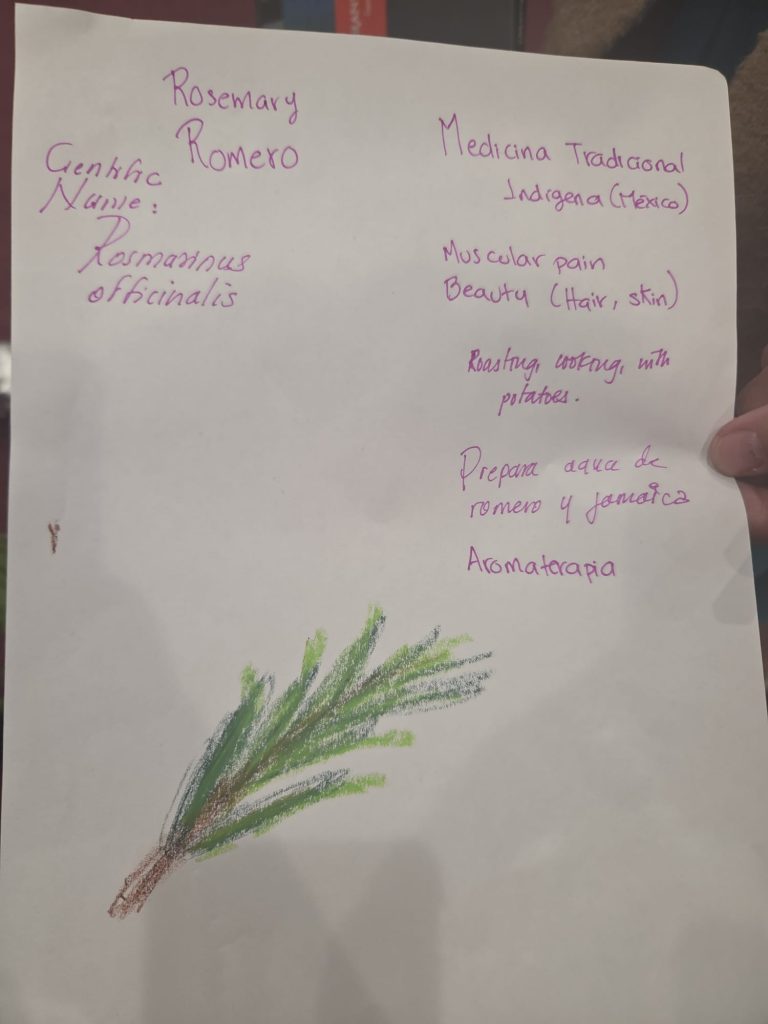
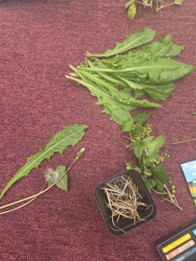
The heart of this workshop is the embodied and sensory experiences of engaging with plants materials. We used commonly found plants i.e. those which would be easily recognised such as dandelions, mint, ginger, sage, lovage, bay, sprigs of blackcurrant leaves, chives, etc. Jane introduced the common dandelion which grows in abundance at this time of year, noting that every part of this plant can be named, eaten, and used medicinally. The dandelion is often known as ‘pee the bed’ signifying its diuretic qualities: this illustrates how plant names are important carriers of local community knowledge passed down through generations. Each person was then invited to select a plant to touch, smell, observe and share knowledge about. Do names of plants provide clues to how humans have interacted or utilised them?
As stories began to emerge, participants offered reflections inspired by scents, textures, colours, and personal associations. The activity revealed how deeply sensory experiences are powerful in connecting us to our histories, languages, families, and cultural identities.
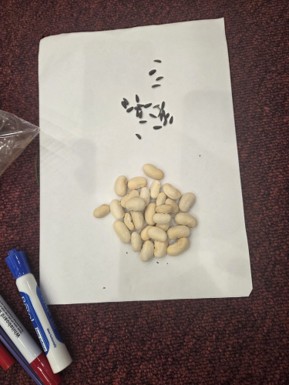
The workshop concluded with a creative plant activity. Participants selected paper and used plant materials to create unique prints, drawings and patterns. Alongside their designs, they were invited to write messages, memories, or words in any language that was meaningful to them. We were fortunate to have such a linguistically diverse audience and this multilingual element demonstrated how language can serve as a bridge between personal memories and collective experiences. One participant shared their ’lightbulb’ moment on realising that they knew the French ‘pissenlit’ for dandelion but had not realised it was derived from the same meaning as ’pee the bed’.
Another group had been discussing the different cultural traditions of the dandelion seedhead. For example, the dandelion head in seed becomes a ’clock’ where the number of blows it takes to remove the seeds gives the time, something remembered from childhood. They mused that this was a rather mundane and pragmatic example contrasting the more romantic idea from another participant were blowing the seed heads ’sends our hopes and dreams out into the ether for loved ones’. While someone shared mint in Arabic, ’naenane’ written as نعناع and in Turkish it is ’nane’.
This workshop benefitted from the presence of UNESCO REILA participants who represented a very wide range of linguistic, cultural and national identities. However, this linguistic and cultural diversity is often hidden in plain sight in Scottish classroom. This points to the importance of recognising human diversity in education spaces as a key driver in flourishing creativity as well as offering pedagogical approaches to embed learning for sustainability. Equally important is our (re)connection to plants and uncovering what we know and don’t know about them. Knowledge that would have in the past been carried through generations is now at risk of being lost because of our disconnection with the plant world, at a time we need this connectivity more than ever. Reflecting on the amazing properties of the common dandelion and what collectively we can know about it and what it can do for us; the answers are surely all hiding in plain sight.
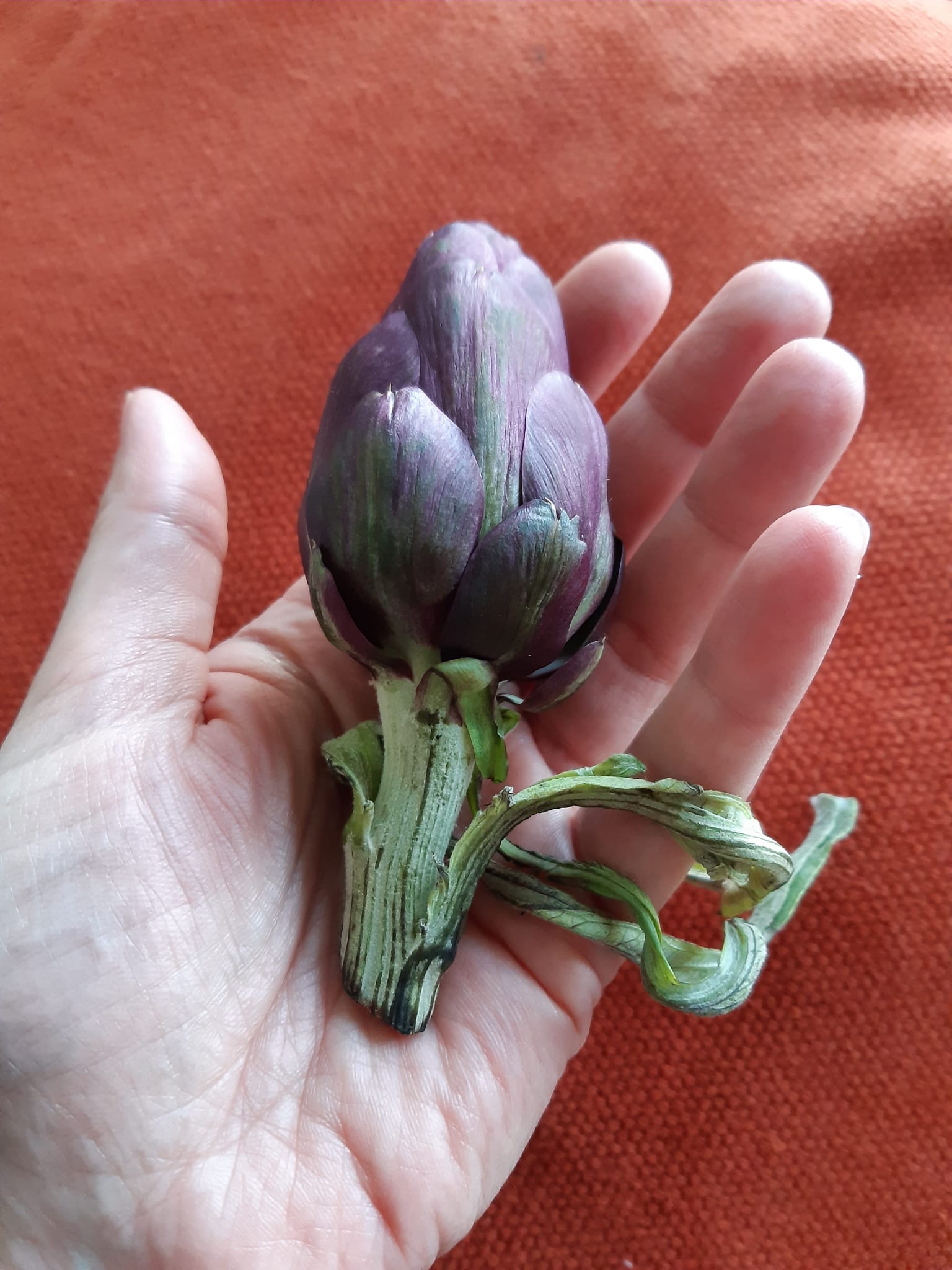
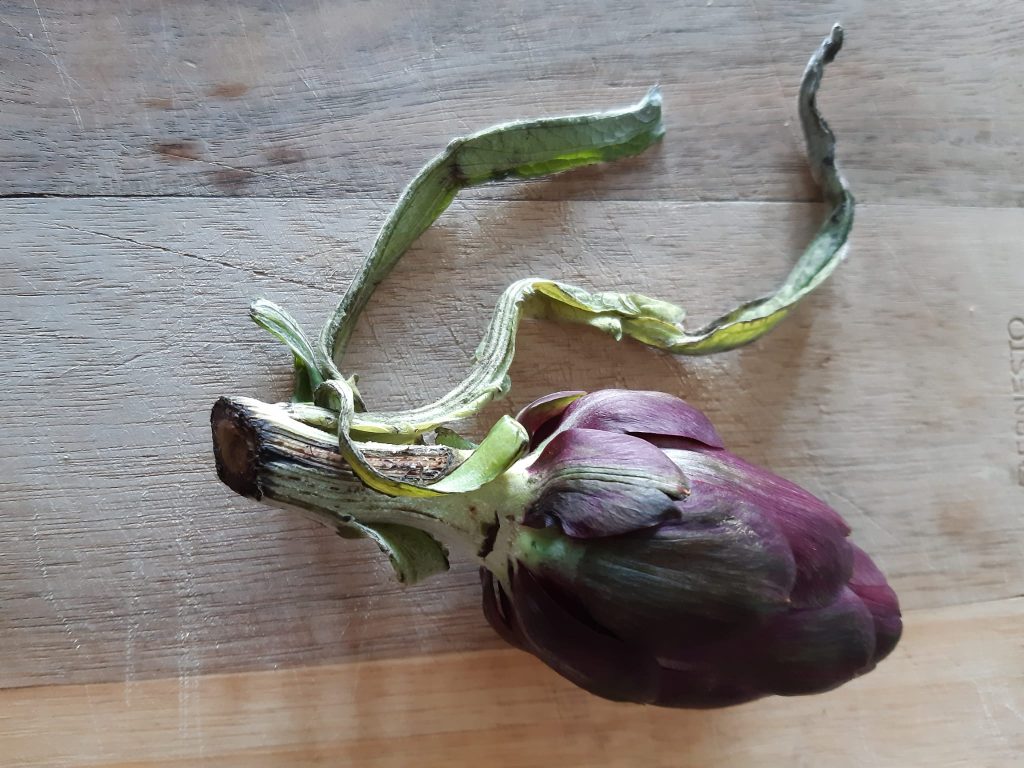
Review your plant repertoire and let us know if you know what castraure are.
We did not have this word in our language repertoire, nor the knowledge of how to use it, where it grows, and its cultural significance. Castraure are a special seasonal type of artichoke, violet in colour and cultivated in the Venetian lagoon on Sant’Erasmo island. Available only in April and May, they are among the first to be harvested and are praised for their mild bitter taste which makes them suitable to eat raw with olive oil, sea salt and a dash of lemon.
Two members of the SDLL team, Dobrochna Futro and Lavinia Hirsu attended in April 16-17, 2026 the celebration event for the project Eco-stories: A Digital toolbox for the English Classroom for Building a Climate-Just Future which gathered researchers, teachers and learners under the banner of “Ecopedgaogy in the Foreign Language Classroom: Promoting Justice, Care and Relationality.” The team shared insights from the Sustainable Designs project in the format of a workshop which involved the exploration of local Venetian plants and fruit (mint, strawberries and castraure). This allowed us to demonstrate how we connect multilingual language learning, personal connections with nature and its elements, and the arts-based methodology that activates a shared learning space.
At the event, we had the opportunity to reflect on what key terms such as ecological pedagogies, environmental studies, eco-criticism and ecolinguistics do to our understandings of literacy, language learning and lived embodied practices. We explored how approaches embedded in nature link us to storytelling, intimate points of human vulnerability, resilience and poesis.
While the event lasted only for two days, the rich and in-depth conversations reminded us how much productive work can be done in this space and how important it is for all of us to think at the edge of our skin as we come into contact with the wind, sun, trees, water, and many other natural elements which make our world and need to be cared for to preserve the fabric of our human-natural relationships.
So, next time you eat artichokes, you may want to do it more mindfully, thinking about the places they travelled, the soil they grew in and the stories they connect you to other people and places.
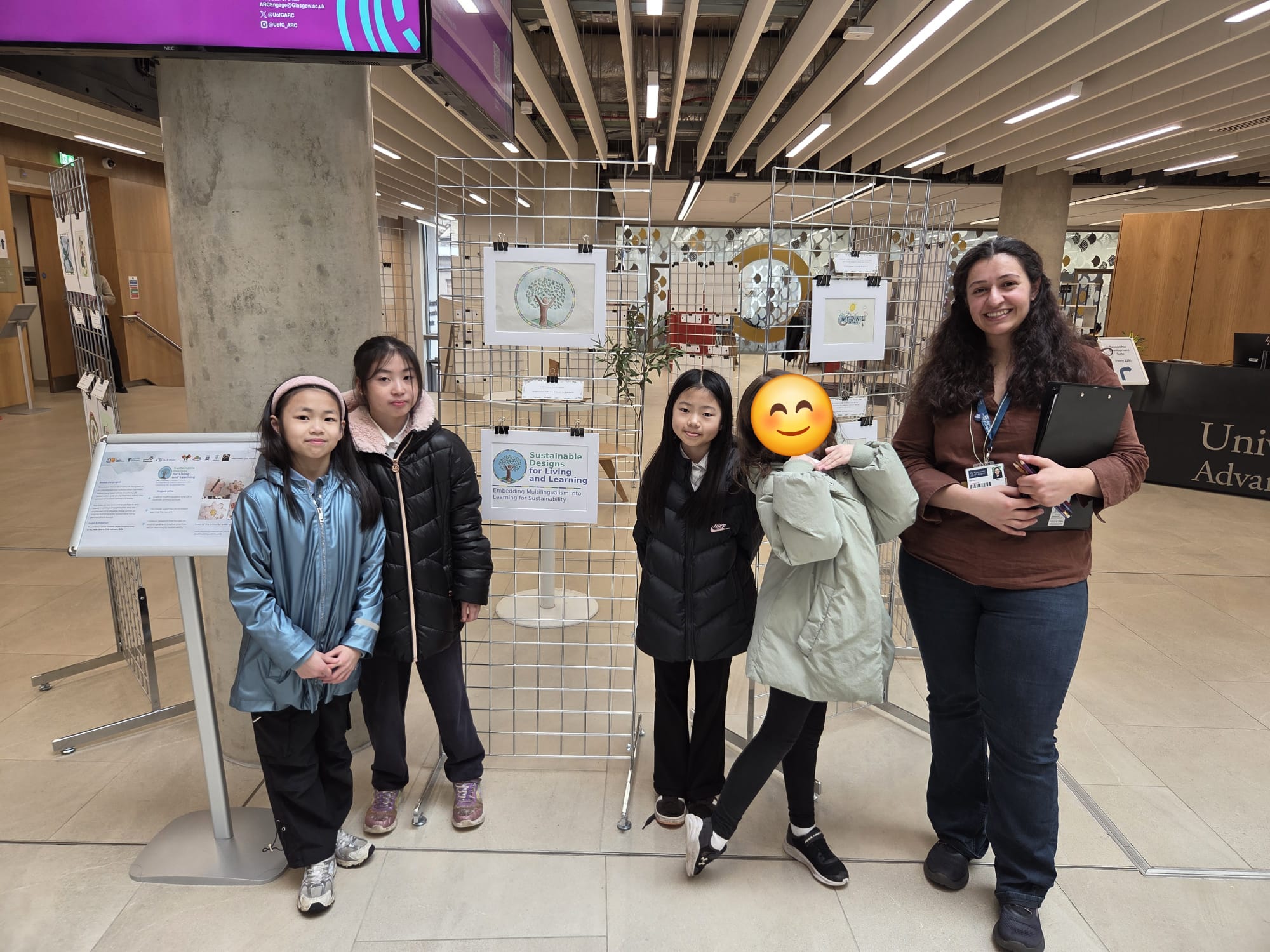
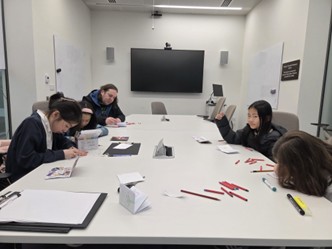
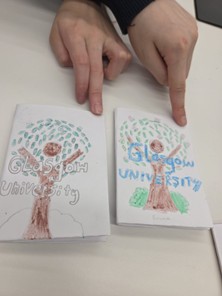
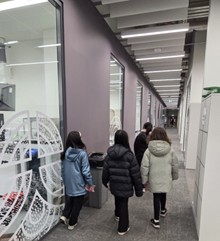
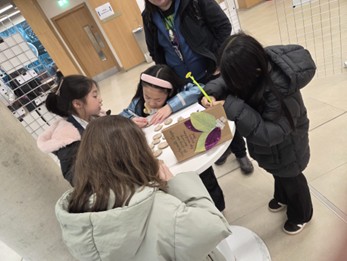
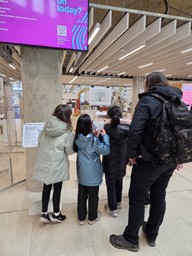
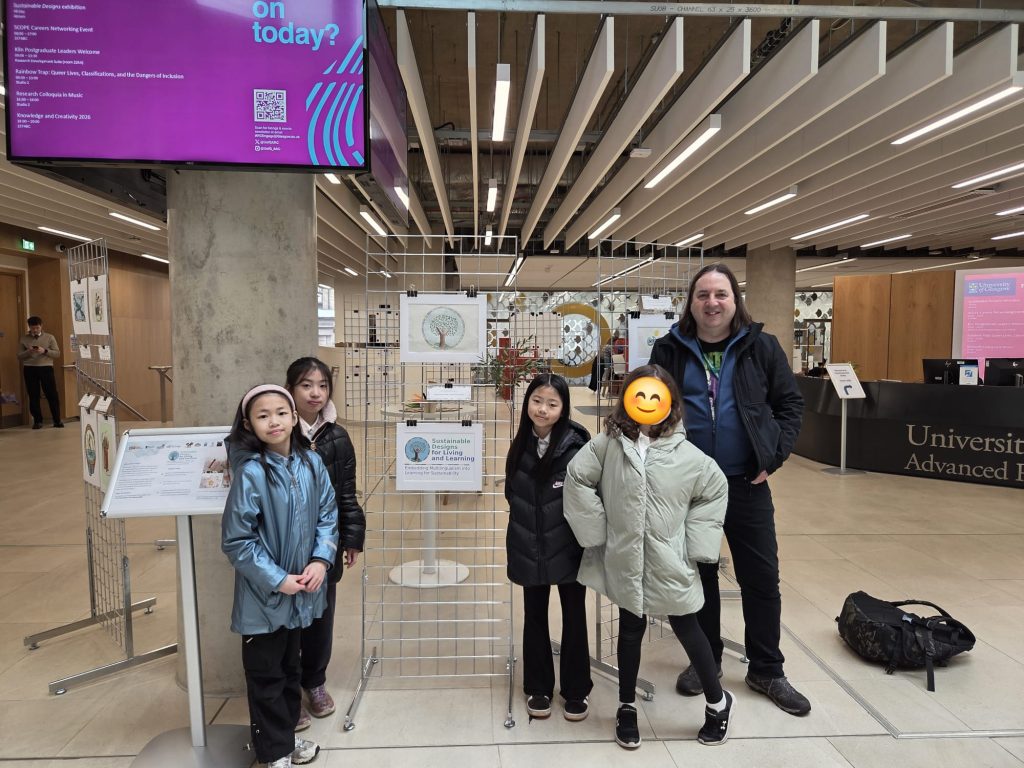
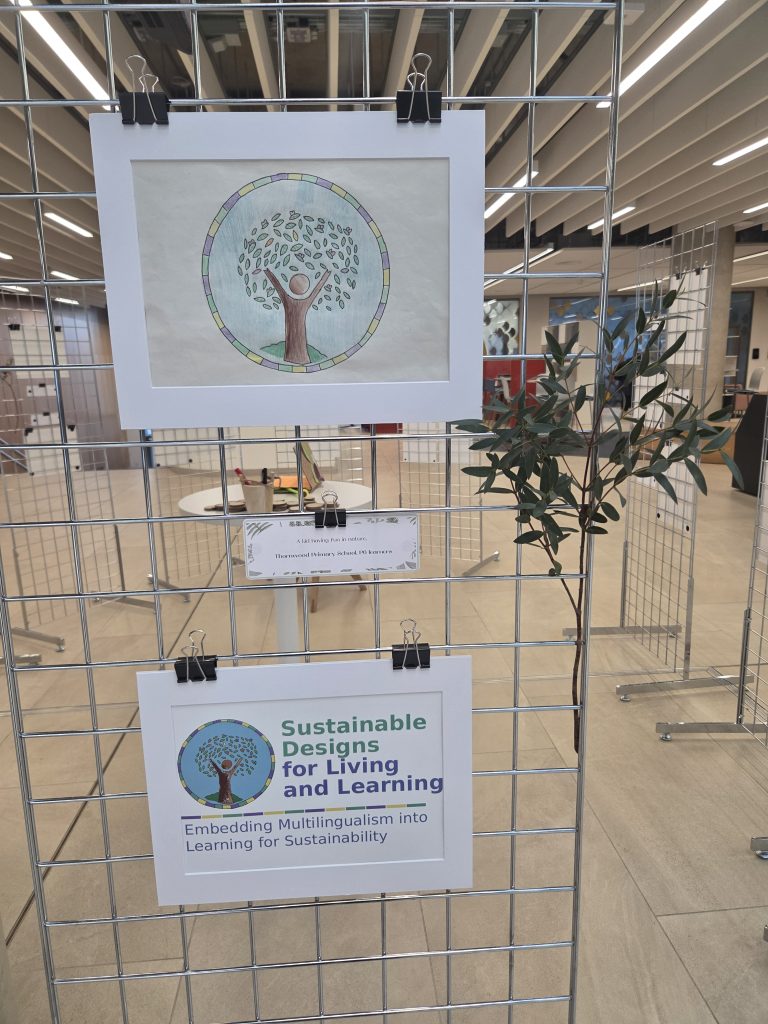
Learners, Alice, H., Xi Ya, Emma and Mr McKinnon from Thornwood Primary School visited the SDLL logo exhibition at ARC. We invited the P6 class who participated in the logo competition to visit the exhibition and look at all the wonderful artwork created by three project partner schools. We started by exploring the history of the Advanced Research Centre and discussed who the building is for. This was followed by looking at the exhibition, reading about the project and exploring what other schools created. At some point, everyone also left a word in any language for visitors to see.
We then decided to explore the building by visiting each floor, starting with the fifth floor which is an interdisciplinary space with social and science researchers. We said hello to my colleague, Hyab, from UNESCO RIELA office, and came up With the idea of creating a zine afterwards. Walking through the corridors, we spoke about the possible experiments at the science labs and looked at some on-going experiments!
On second floor, we visited the ‘Makers’ space, learning about crafts and 3D printing. Going back to fifth floor, we decided to create a zine about our visit to ARC and anything else everyone found interesting. At the end, everyone took the zine away to share with the classroom. Being present in one of the meeting rooms, we decided the next meeting would be about the sun!
Spring is coming and nature wakes up, the soil begins to give, the sun becomes stronger and the wind shares stories of near and far.
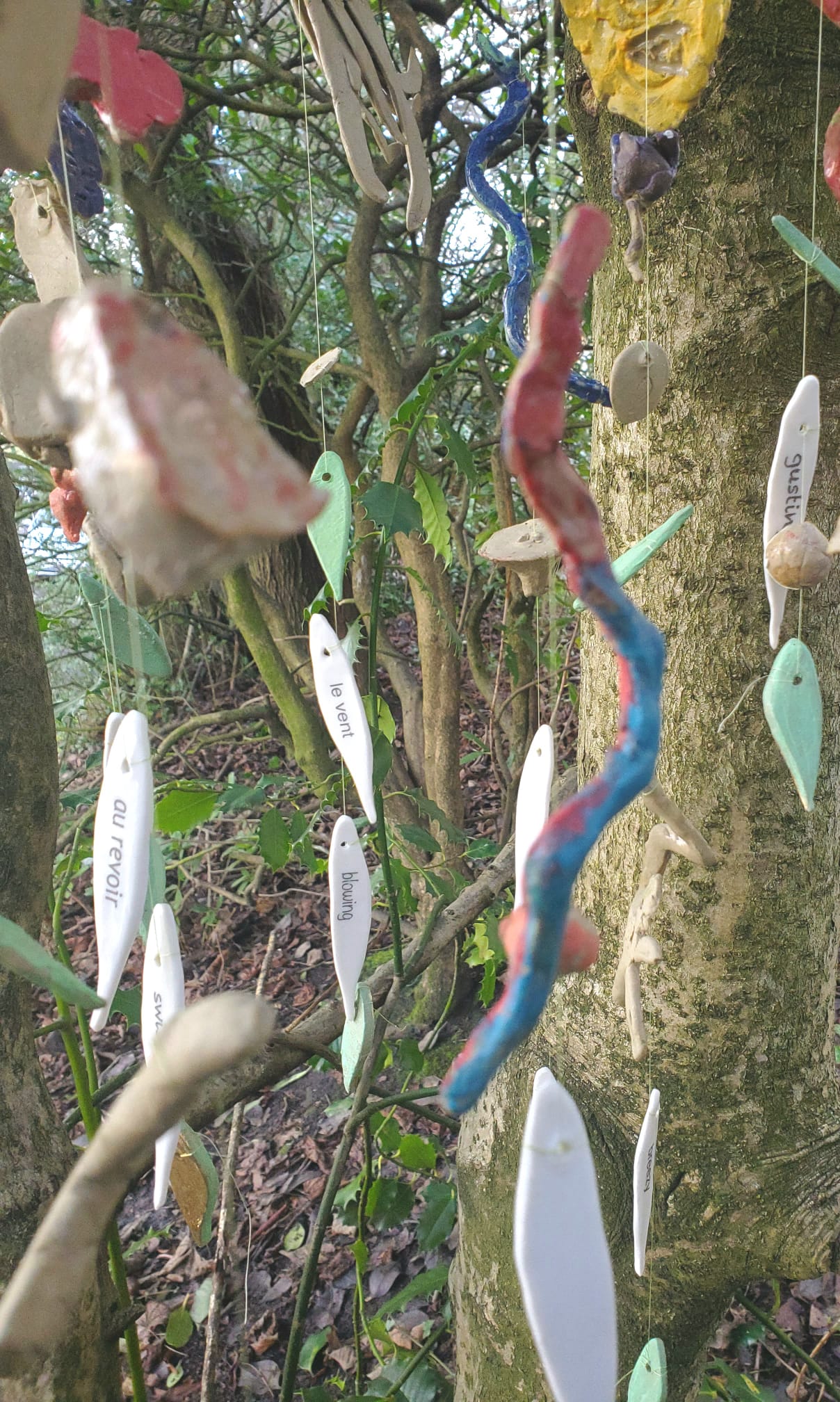
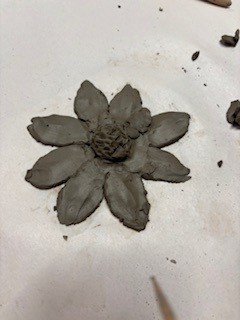
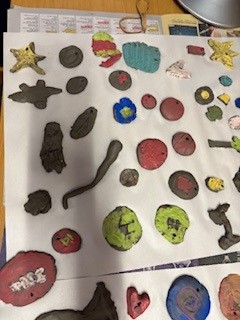
To catch these pulses of nature, we are happy to share with you a sneak peak of our wind chimes. Designed by children across three primary schools and led by our ceramics artist Louise McVey, the wind chimes will travel to the schools’ gardens and add sound, story, colour, and light to the school communities. The pieces of the wind chimes have all been created in school by the crafty hands of our learners who share through their creations their imagination and knowledge of nature, as well as their words and languages that weave into their natural environment:
wind breeze буря cyclone l’ ouragan 凍 tornado windy
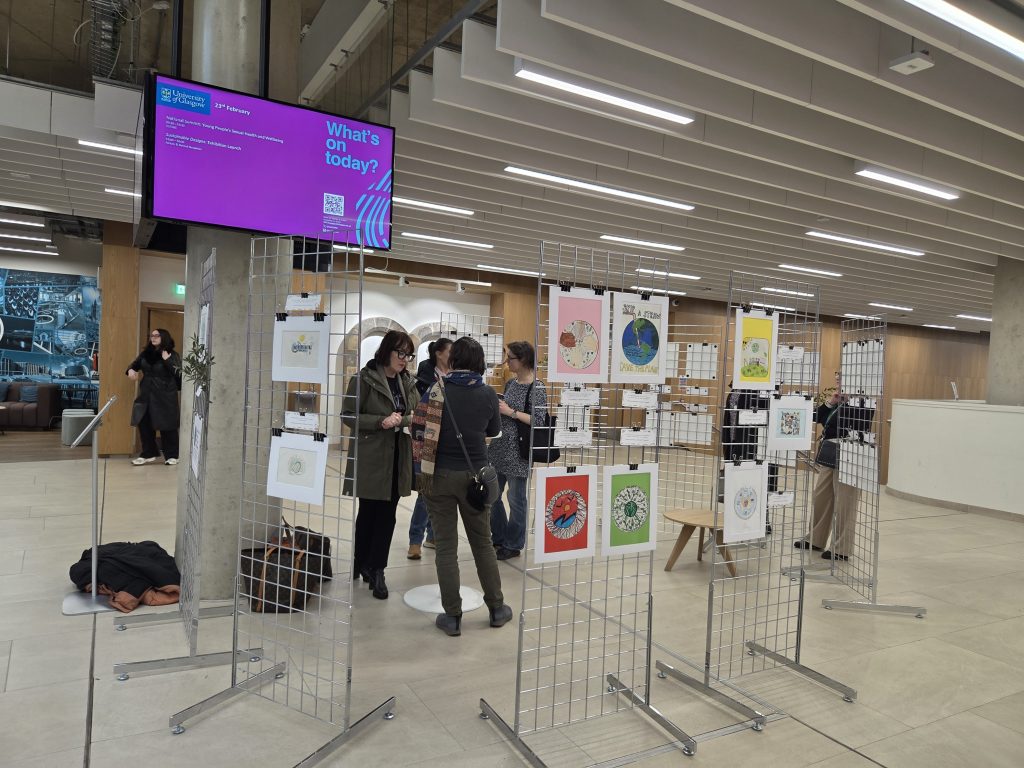
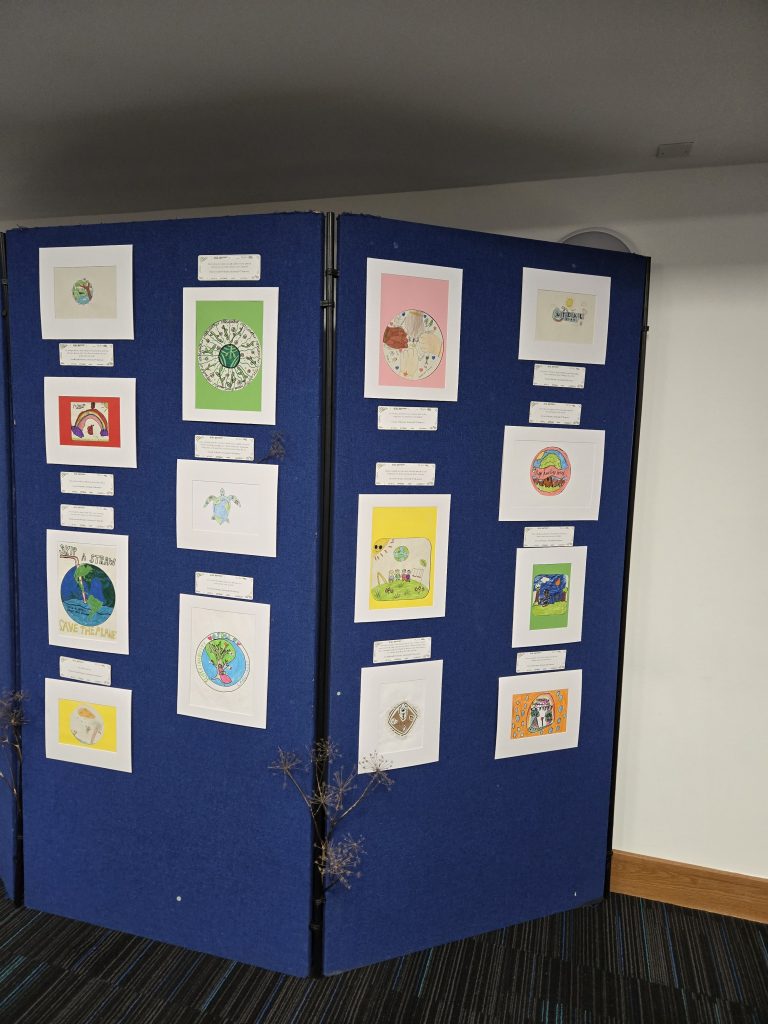
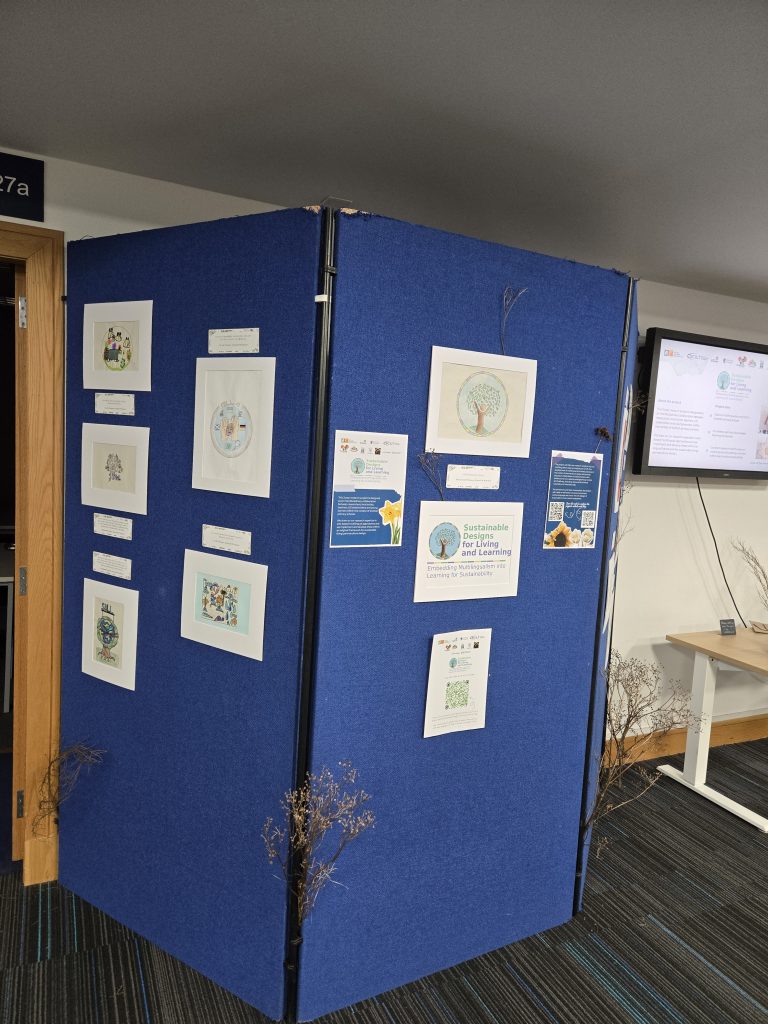
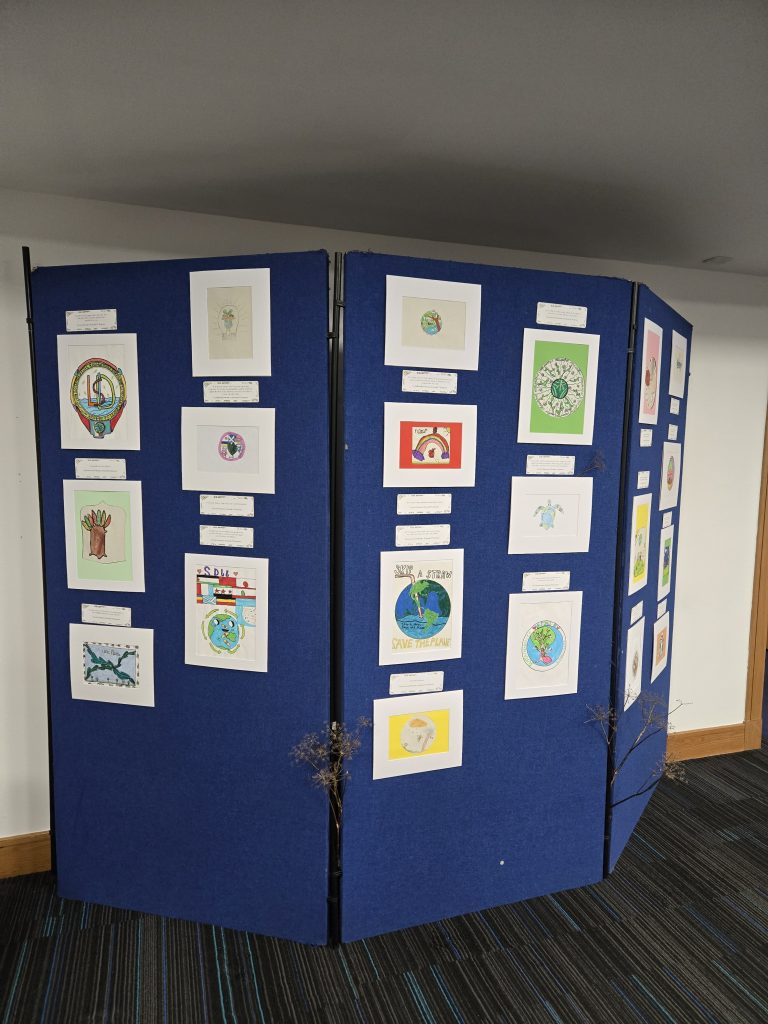
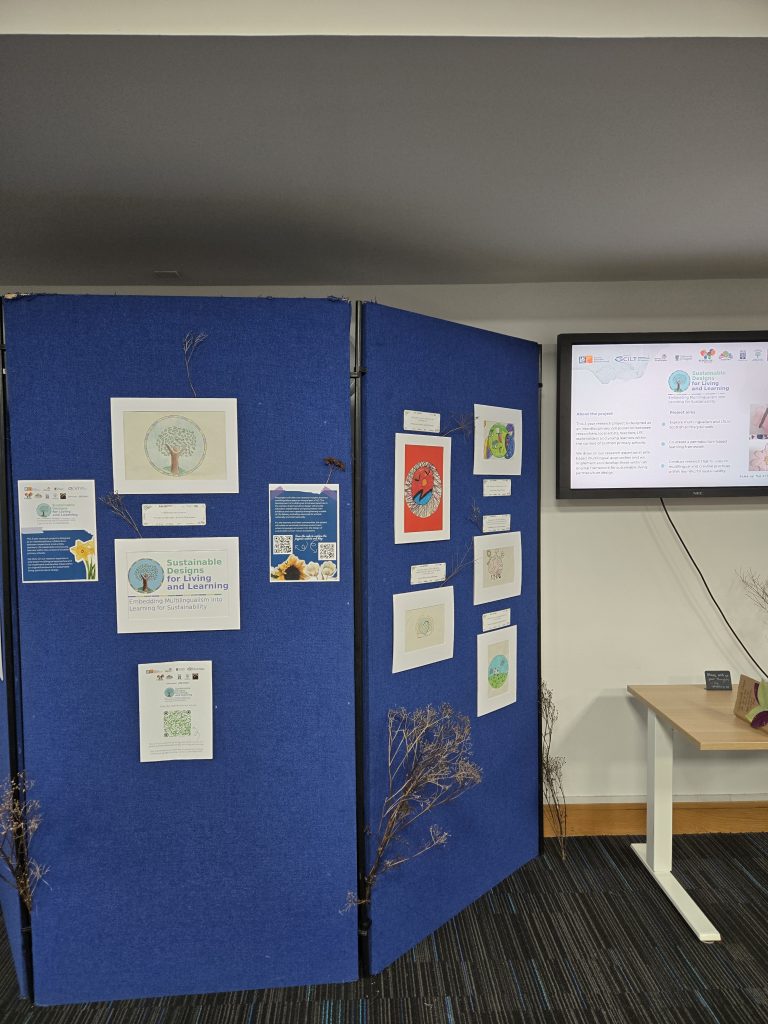
The SDLL logo exhibition has been on display throughout February, celebrating the creativity and talent of children from across our 3 partner schools.
The exhibition launched during Languages Week Scotland 2026 at the University of Strathclyde, where the children’s logo designs were proudly displayed in the Lord Hope building. Parents, children, teachers and colleagues gathered for the special launch event on Monday 2nd February, marking an inspiring start to the exhibition’s journey. Guests were invited to leave a comment in the visitors’ book in a language of their choosing, creating a wonderful tapestry of multilingual messages to accompany the artwork.
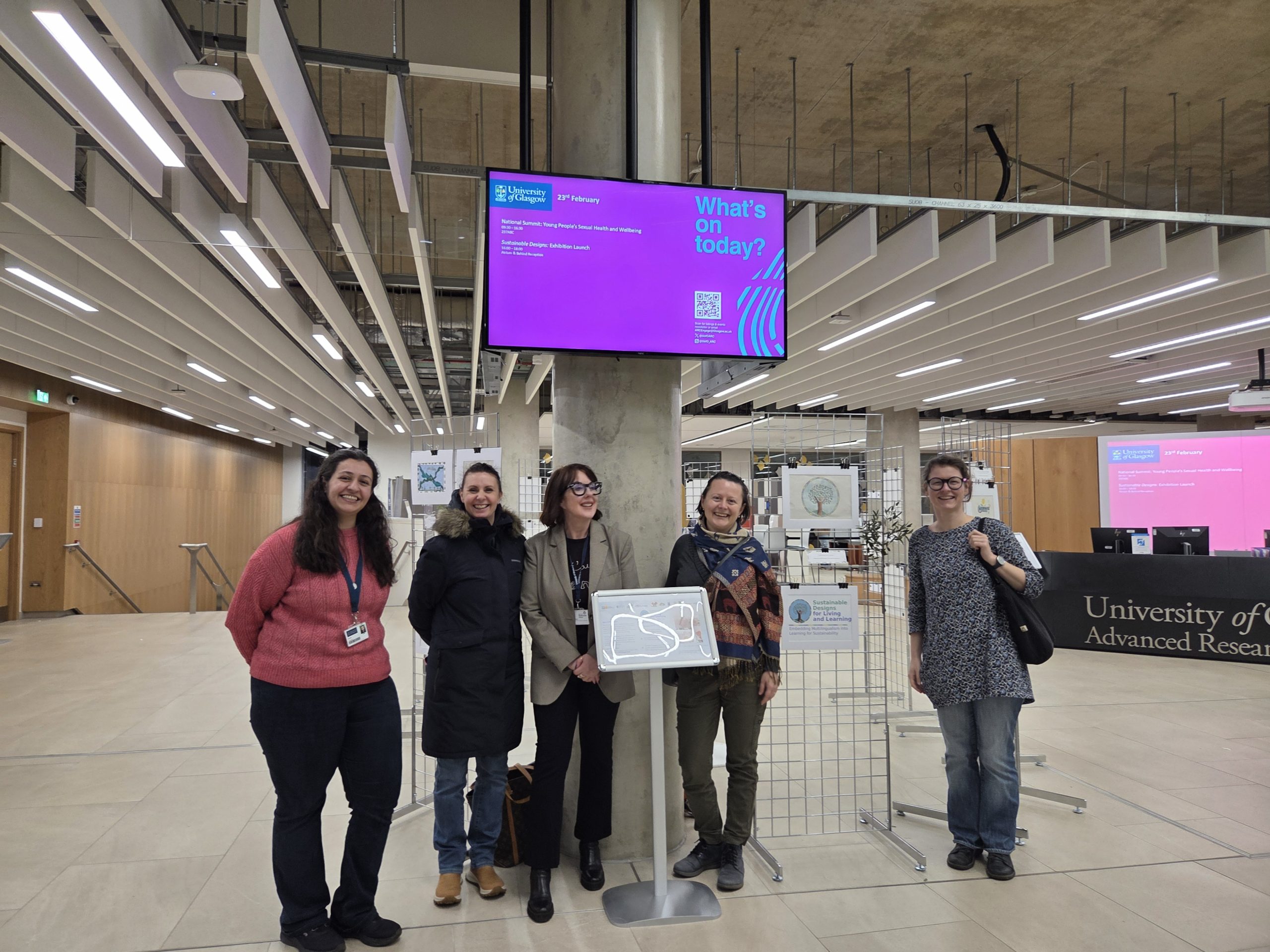
Following its successful debut, the exhibition travelled west to the University of Glasgow, where it has been on display at the Advanced Research Centre (ARC) since the launch event on Monday 23rd February. Visitors there were also invited to contribute by writing words on wooden shapes, adding their own languages and voices to this growing celebration of diversity and creativity.
But the journey doesn’t stop there….
If you didn’t manage to catch the exhibition in February, we’re delighted to share some exciting news! From 9th March to 7th April, the full collection of children’s designs will be showcased at the iconic Glasgow City Chambers. We are absolutely thrilled to bring this vibrant display to the heart of the city and to highlight the remarkable artistry, imagination and multilingual voices of the young learners. We warmly invite you to pop along, explore the inspiring designs, and read the multilingual quotes shared by children about their experience of the project. Be sure to sign the visitors’ book and add a word in a language you know to the language tree on display.
Sustainable Designs for Living and Learning (SDLL) is an interdisciplinary research project led by the University of Glasgow and SCILT at the University of Strathclyde. The project promotes creative and multilingual approaches to Learning for Sustainability, underpinned by ethics of Permaculture: Earth Care, People Care and Fair Share.
We are now moving into Year 2 and we are looking for a diverse range of 10 primary schools to work with us. Participating schools will:
take part in professional learning for teachers
trial arts-based activities with learners to support languages taught and represented in their classrooms
collaborate to co-create learning framework
support learners in developing their language skills and global citizenship
Each school involved will receive £5,000 to support their participation in the project.
Register interest by close of business on Friday 27 March 2026.
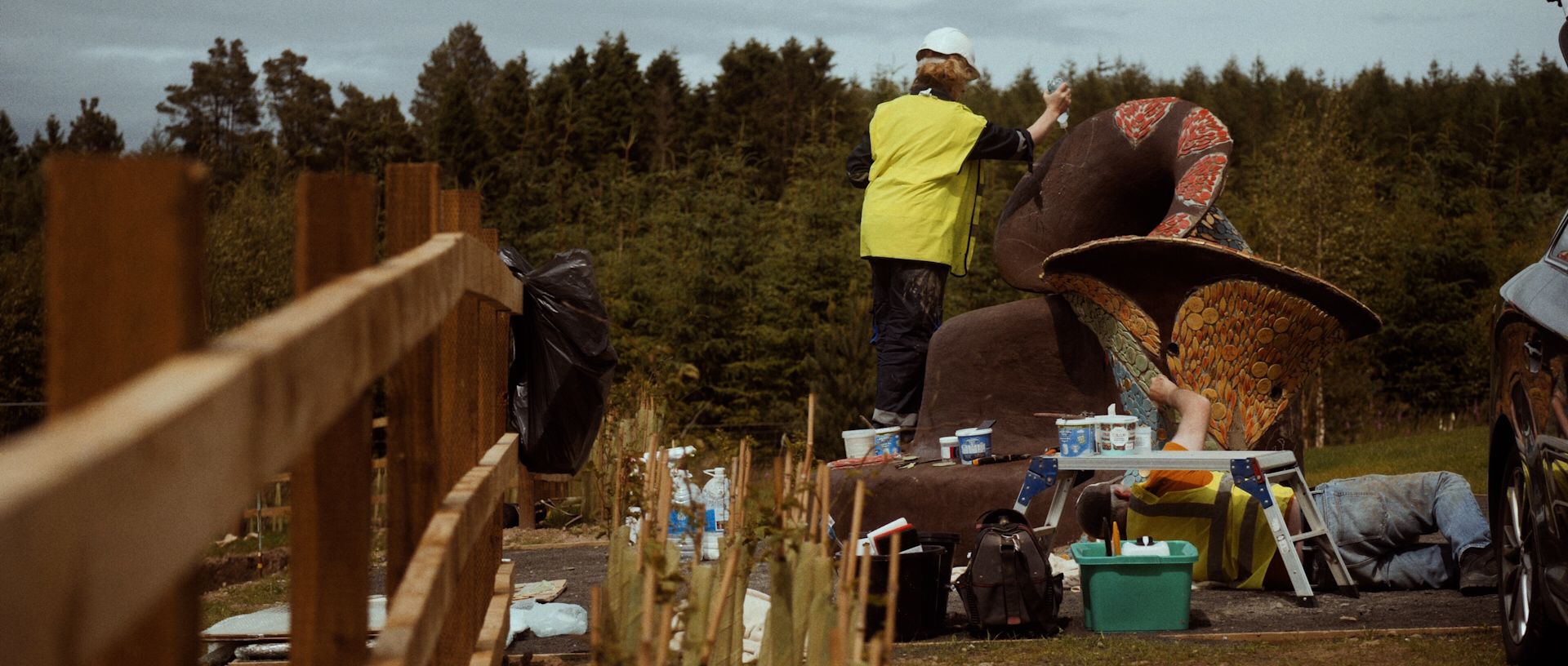
The SDLL project aims to turn big dreams into reality: we work with school communities and their gardens and redesign these as generative spaces where languages, the arts and principles of permaculture can thrive. While we find our pathways and develop our slow and nature-attuned solutions, people may wonder how do we plan to bring all these complex dimensions together. How can we morph the arts and sustainability with multilingual designs? To be able to accomplish this mission, we have brought into our team three lead artists with unique visions and strong permaculture understandings. Among the three artists, Louise McVey will lead activities and share her creativity built over the years while modelling clay and ceramics.
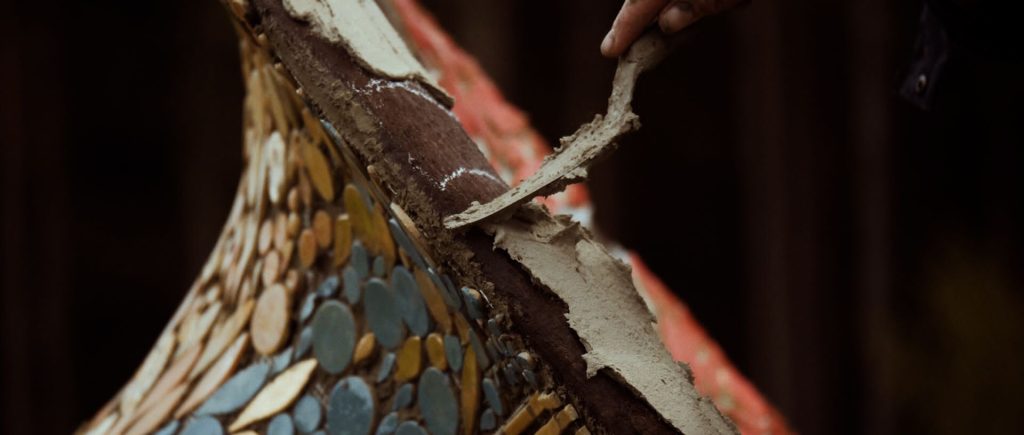
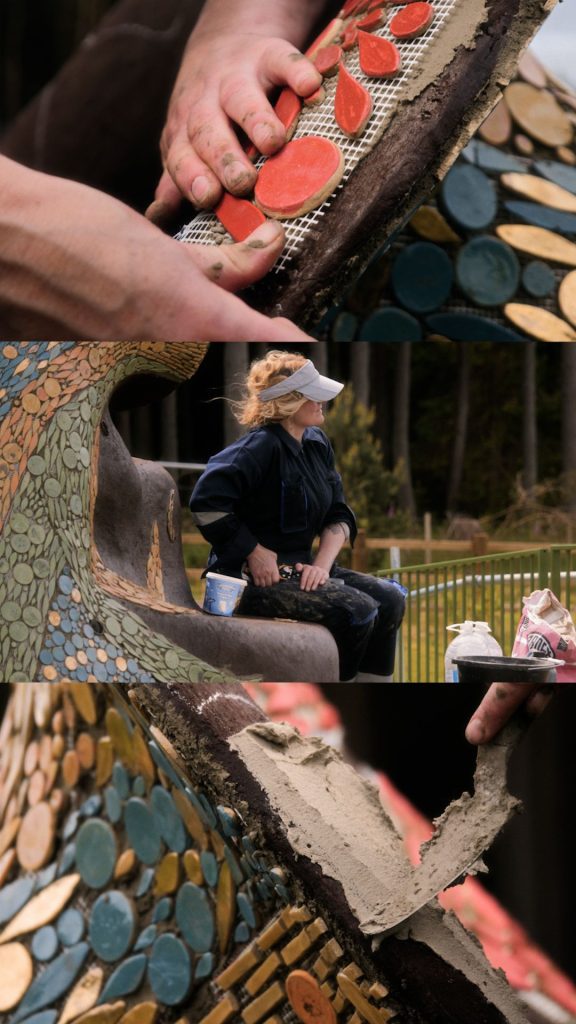
Louise is bringing to the project wonderful concept ideas that materialise and integrate permaculture design principles and a passion for interactive artistry. Her creations set up beautiful dialogues with nature and one of her most recent projects is a Living Bench. The short video below (4 min.) created by Paul McConnach gives you an insight into the creative process, starting with the concept idea, moving into action, and leading towards the completed bench design now awaiting nature to contribute to the Living Bench.
The Living Bench is a wonderful example of how art integrates into nature’s rhythms. It is also a call for all of us working interdisciplinarily to pay attention to the edges of our professional trainings, to open up to new fields and ask questions anew, to move more into the life of communities that surround us. In these ways, we will be able to discover new solutions that our current environments really need. If you’re interested in knowing more about what Louise is currently working on in our project, follow our upcoming blogs where we will soon share stories about our school windchimes.
Jane Catlin, Teaching Fellow at Strathclyde’s Institute of Education at the University of Strathclyde, Dr Lavinia Hirsu, Senior Lecturer in Applied Linguistics at the University of Glasgow and the SDLL project leader, and Karen Faulds, Professional Development Officer at SCILT, Scotland’s National Centre for Languages, speak to Molly, Communications Intern at SCILT, about the SDLL logo exhibition.
Scotland’s National Centre for Languages (SCILT) invites you to join us for the official launch of the Sustainable Designs for Living and Learning Logo Exhibition! Come along and celebrate the creativity, imagination, and sustainable thinking of pupils from Scottish-based primary schools. This exhibition showcases logos created by young learners as part of SDLL, an innovative and collaborative research project exploring how sustainability and multilingual learning can shape future learning environments.
At the launch event, you will also have the opportunity to meet some of the SDLL team and find out more about this exciting, innovative, and collaborative research project, and its aims for shaping sustainable and multilingual learning environments.
The video below shows entries at the judging panel.
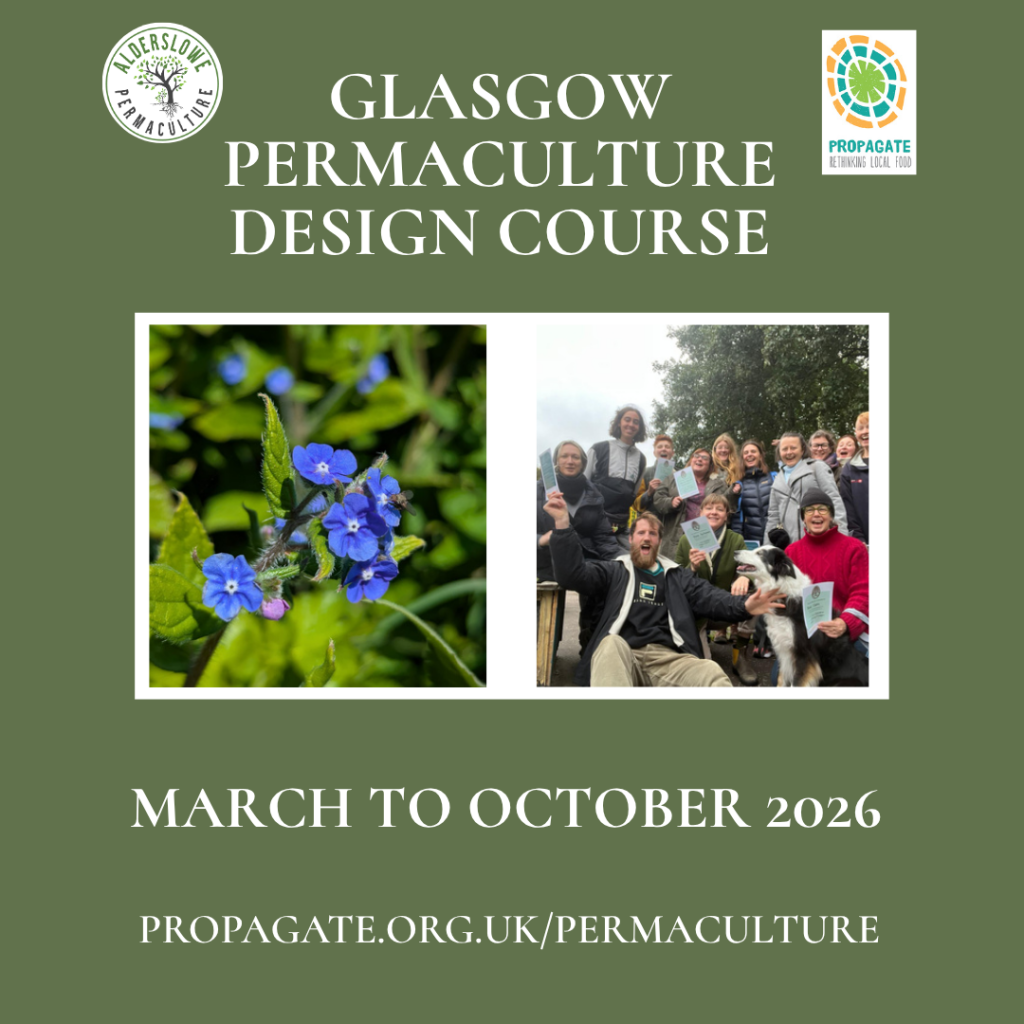
An opportunity for you to dive deeper into permaculture through a Permaculture Design Course in Glasgow starting in March. This is the same course which our core team did last year, which set the foundations for the SDLL project. The first Saturday will be at the inspirational Concrete Garden, and the subsequent five Saturdays will be at other exceptional urban permaculture sites from a food forest in a city park, to a market garden behind a few tenements in the east end of Glasgow.
This term has been a busy one now that the SDLL project is in full swing. The research team and artists have been working closely with our partner schools to explore the first principle of permaculture: Observation. This foundational principle encourages us to slow down, pay attention, and develop a deeper understanding of the natural systems that surround us before we attempt to design within them. Across our participating schools, this principle has been explored through a rich programme of arts-based activities that have focused on each school’s unique local environment. Rather than introducing observation as a theoretical concept, children have been invited to engage directly with nature through exploratory, creative, and sensory experiences. These activities have supported them in noticing details, recognising patterns, and building a stronger connection to the places they inhabit every day.
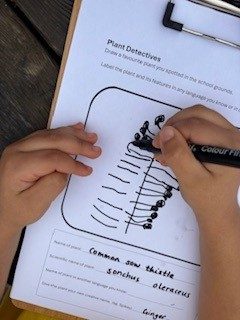
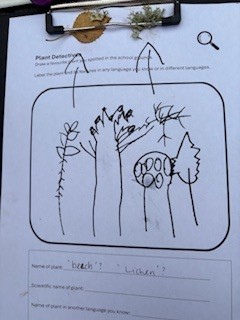
One of the activities delivered across schools was Plant Detectives. In this session, children explored their school grounds and nearby outdoor spaces equipped with magnifying glasses, transforming familiar surroundings into landscapes of discovery. Children carefully examined leaves, stems, and tiny organisms, often expressing surprise at the complexity and beauty revealed through close observation. The act of slowing down and looking closely encouraged patience and curiosity, helping children realise how much is happening just beneath the surface of everyday environments. Alongside practical exploration, teachers and the research team facilitated reflective conversations, prompting the learners to think more deeply about what they were seeing. Questions such as how plants adapt to their surroundings, what conditions support growth such as the importance of sun and shade prompted further discussion.
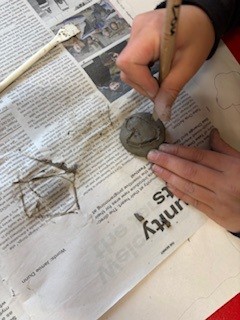
Another activity focused on observing an element that is often invisible yet constantly present: the wind. Through the creation of clay wind chimes, children discussed how wind moves through environment. They spent time thinking about the wind, noticing where it travelled, and how it interacted with buildings, trees, and open spaces. These observations informed their designs as they shaped clay pieces intended to respond to movement and sound. Working with clay encouraged a mindful, hands-on approach to making. Once installed outdoors, the wind chimes will become an ongoing tool for observation, allowing children to listen to and reflect on the presence of wind over time.
The impact of these activities has been strongly felt by teaching staff. Reflecting on the project, Lynne McGinn, Head Teacher at West Primary School, shared: “Taking part in the Learning for Sustainability project is helping to transform the way our children see the world. Through hands-on workshops and meaningful real-life experiences, our pupils have grown in confidence, curiosity, and compassion. As teachers, we have seen pupils take ownership of their environment, ask deeper questions, and recognise the power they have to create positive change—both in school and beyond.”
Across all schools, the work so far has established observation as a shared practice between researchers, artists, teachers, and pupils. Next term we will move on from observation as we start to think about the next stages of permaculture design: analysis and design.
Now more than ever, projects such as SCILT’s Sustainable Designs for Living and Learning are vital. At a time when schools and multilingual children face political attacks and damaging narratives about “smashing culture,” this work powerfully reaffirms that languages do not erase culture – they enrich it. Our classrooms are home to multilingual seedlings: children whose languages, identities and lived experiences are full of potential. With care, encouragement and thoughtful design, these seedlings can flourish.
Sustainable Designs for Living and Learning gives children and their teachers a creative lens through which to explore the natural world around them, finding vocabulary to describe their environment, their experiences, and their place within it. We know that the ability to communicate in more than one language brings profound benefits for individuals and society, developing empathy, curiosity, and global awareness. By adopting multilingual approaches that enable all children to thrive, our hope is that is they grow into responsible, sustainable global citizens, confident in their voices and empowered to reach their full potential.
How do languages and sensations interact? This was the provocation of the conference Multisensuality and Language, an online event that took place on November 14-15, 2025. Our team represented by Florence Logan (performance-maker) and Lavinia Hirsu (researcher) shared our emerging work in a presentation entitled: “Dancing with Nature: exploring multilingualism and sustainability through hyperlocality” on November 15, 2025.
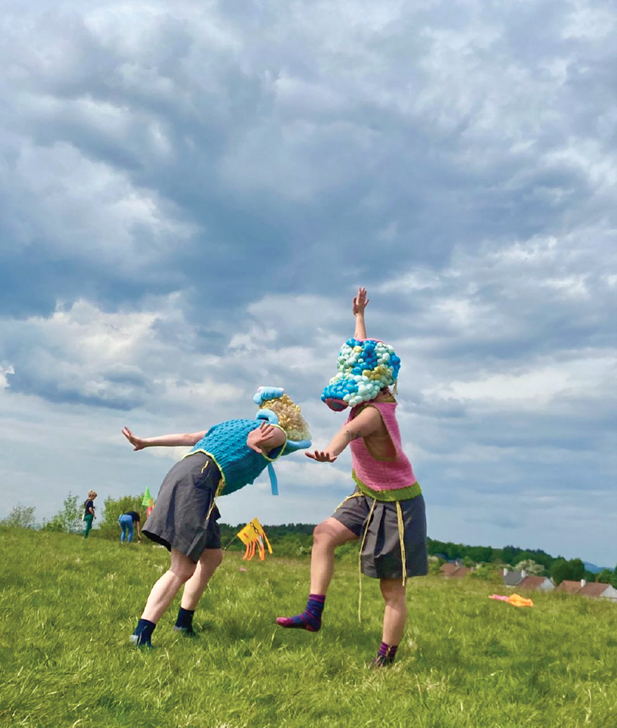
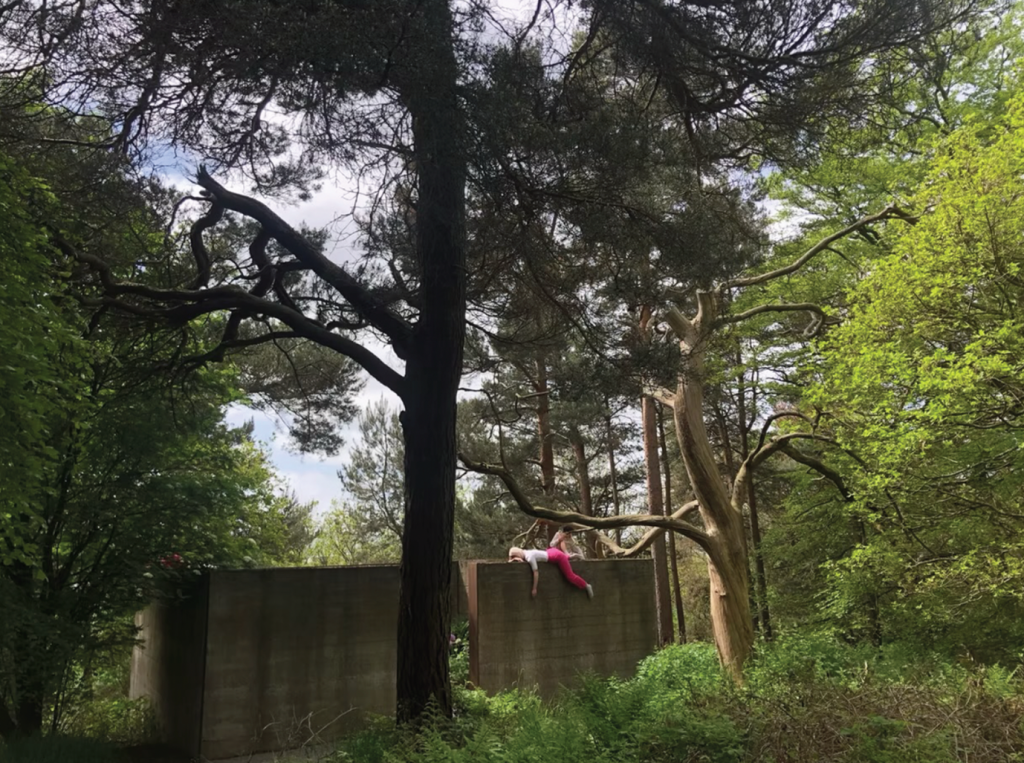
Drawing on her rich experience, Florence shared some of the creative processes that sit at the basis of her practice and which we are drawing on to develop activities for primary school children in their multilingual environments. The activities aim to (re)connect children with nature and their own bodies, inviting them to explore how we “become” the world, how play can be generative of language-nature-culture, and how dance and other forms of performance can be forms of care and self-care. Through hyperlocality, we help children develop their observation skills, explore their sense of awareness, curiosity, and awe for their immediate spaces, we turn their attention to the edges of their school grounds, the meeting points of their bodies with the things around them, and the resonance of primary vital forces (such as water) from the human bodies to the elements in the natural world.
The conference was an amazing encounter of people, ideas and sense-thinking. We explored notions of language and meaning-making in contexts that brought in not only the human senses and sensuality, but also the often hard-to-perceive nuances and layers of being human in a world of signs and sign-making. We learned about urban smells, olfactory racism and smellscapes with Stephanie Weisman, language portraits and visualizing multisensory language experiences with Carola Koblitz, and doggolingo – a discursive digital approach to anthropomorphising canine behavior with Beata Bury. These are only a few examples of a rich programme that carved new spaces for touch, sight, sound, taste, gesture, emotion, word, and bodies sensing and marking the places we inhabit.
As part of Sustainable Designs for Living and Learning, we are inviting primary and early years teachers and education staff to take part in a survey.
The survey aims to gather information on how multilingualism and Learning for Sustainability (LfS) are currently supported in Scottish primary schools and early years settings. This information will help move the project forward and facilitate the exploration of various related topics: how languages and LfS can be integrated, and how these two areas of work complement each other.
By sharing your ideas, views and experiences, you will help the project team better understand the challenges education staff face, and reveal the many great examples of good practice and innovation that happen every day in schools and early years settings across the country.
Please note:
The survey will take 10-15 minutes to complete
The survey closes on 31 January 2026
The survey is being carried out by Bilingualism Matters on behalf of the SDLL project team.
To prepare for our involvement in the Sustainable Designs for Living and Learning project, members of the research team, Dr Lavinia Hirsu and Dr Dobrochna Futro (University of Glasgow), Karen Faulds (SCILT) and Jane Catlin (University of Strathclyde), began our permaculture journey in April, undertaking a Permaculture Design course (PDC) with the Permaculture Association. This involved engaging in a series of self-study modules, joining regular online Zoom workshops and attending six in-person practical permaculture sessions in various venues across Glasgow. The Permaculture Design Course was expertly led by Lusi Alderslowe, and we thank her for her commitment, continued support and guidance. We completed the PDC course in October, following a 6-month period of intensive learning. You can read more about our journey below.
April: The Concrete Garden, Possilpark, Glasgow
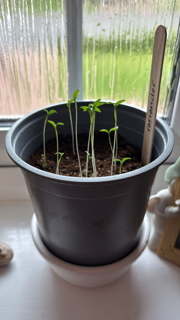
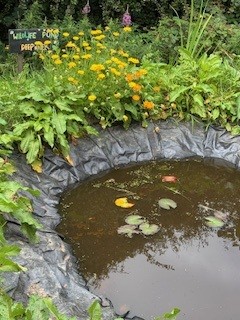
This was our first site visit where we got the opportunity to meet our peer group and fellow PDC course participants. On this day we learned about zoning in permaculture, companion planting, composting (hot and cold), plant splitting, seed planting and taking cuttings from trees. We planted coriander seeds to take away and watched them grow and flourish at home! The plants that we split have since been transferred to the ground and into pots and we can report that our lemon balm is thriving!
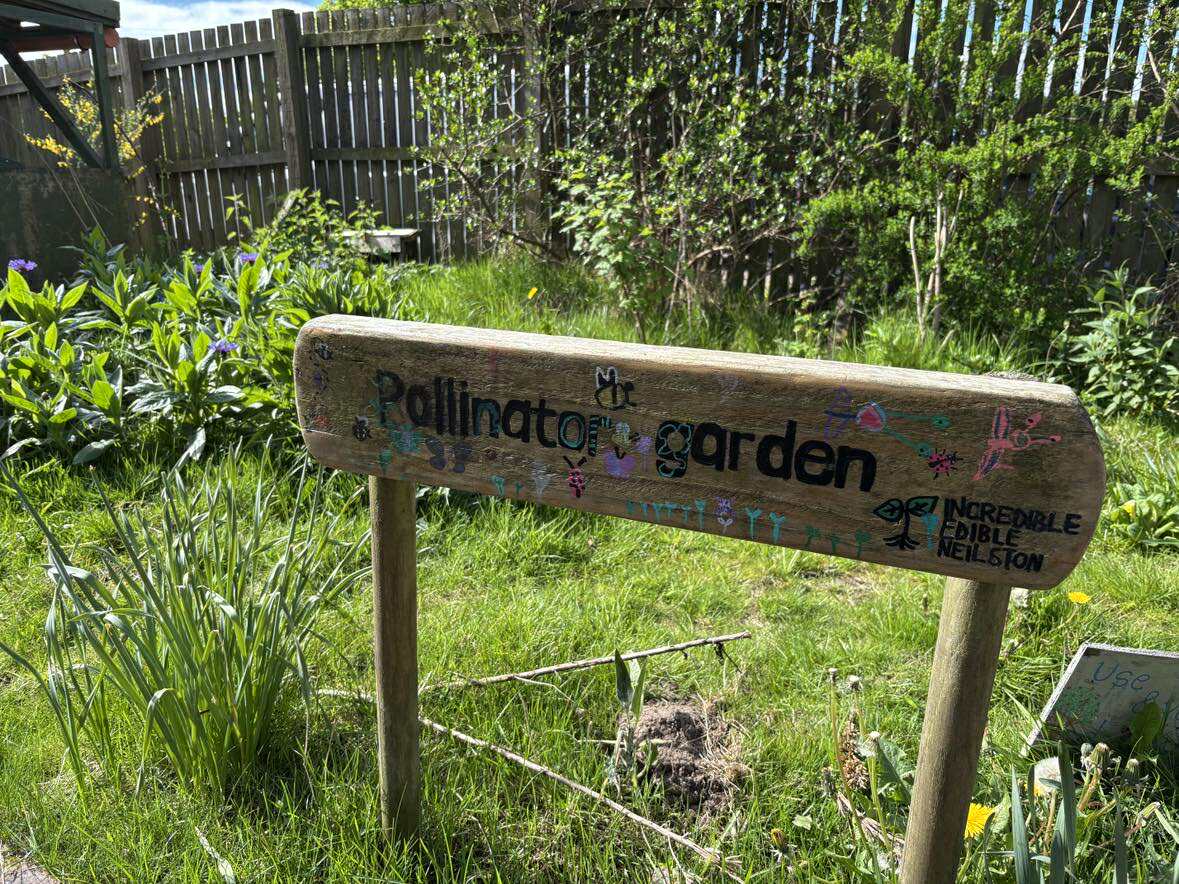
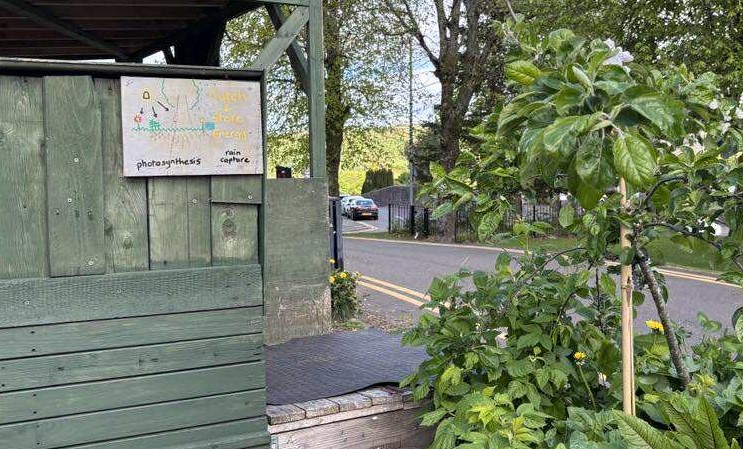
This is actually an incredible community space which even has its own community composting equipment! We toured the site, all well sign-posted such as the pollinator sign to show how the community area is encouraging and promoting biodiversity in their space. We honed our map-reading skills and visited the community shop/larder which shares excess produce, among other things, grown and shared within the local community. The catch and store image highlights the Permaculture Principle: Catch and Store energy. This principle deals with the capture and storage of energy, within the environment, buildings and even society. You can see from the pic how a volunteer has created a visual and if I remember correctly, there is guttering and a water butt just next to the image gathering rainwater.
Pollinator gardenIncredible Edible community space
July: The Wash House Garden, Tollcross Road, Glasgow
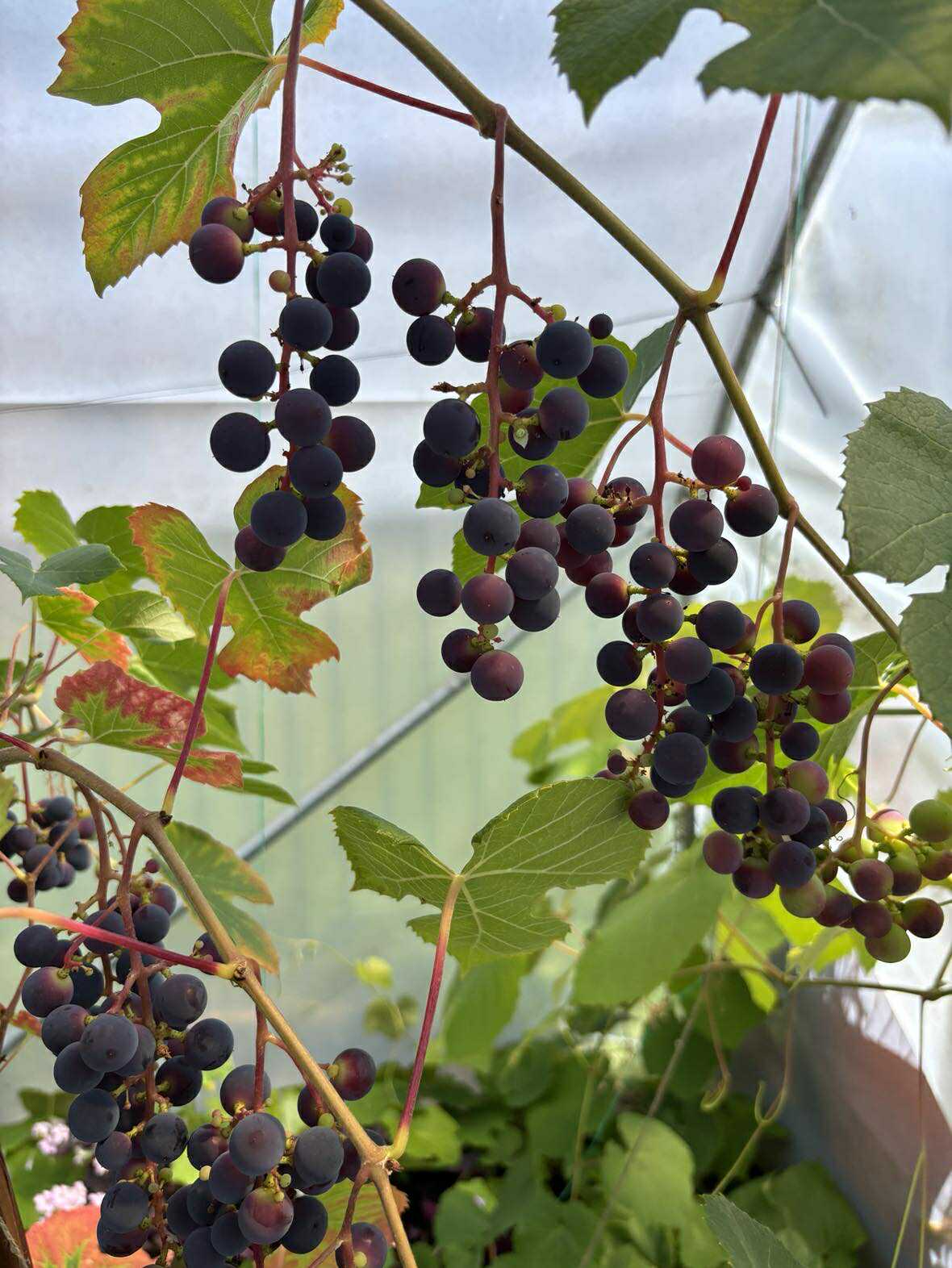
It was a scorcher of day mid-July when we visited here! So much so the ice-lollies were melting in the ice box! Here we saw grapes growing in a polytunnel in the East End of Glasgow, near to where the Parkhead washhouse used to be. Who would’ve thought that was possible with our climate! On this field visit, we learned about soil recognition/composition, food forests, harvesting and seed planting.
On this late summer day in August, we had a tour of the Alexandra Park food forest with Louise King. We also got a tour of the continuous flow wormery, did some practical work on seed saving and explored the kitchen garden, including the contents of the polytunnel. Amazing produce being grown in here, including rare tomatoes native to North America! We engaged in practical activities with Sukhema who led a session on Work that Reconnects . This related to the personal and social permaculture part of the PDC curriculum and certainly gave much food for thought overall.
September & October: Kinning Park Complex, Glasgow
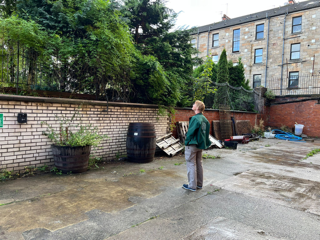
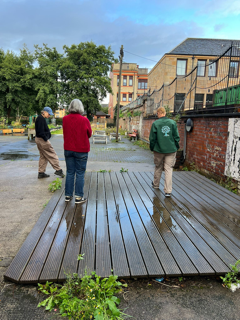
Kinning Park Complex (KPC) was the final location at which we would have the opportunity to apply our permaculture knowledge and design tools into creating a design for the outdoor space of this complex. In groups, we each had a design brief to work on, and these included: a) a full site design, b) a warm space design and c) a water harvesting design, based on the needs of the client. During September we worked in groups to create our designs and in October, we shared them with our peers. What a wonderful occasion that was, sharing our learning with each other in such a meaningful and engaging way. The course concluded with a fun and joyful certificate award ceremony which was akin to Strip the Willow in format! Much joy and celebration were had by all! Going forward, we hope to spread the seeds of permaculture where and whenever we can, ensuring it continues to inspire and inform our ongoing explorations of languages and permaculture in the months ahead. In relation to the SDLL project, teachers and artists will now participate in an abridged version of the Permaculture Design Course which will involve inputs from Permaculture Association and self-study modules. The research team, along with the artists have started working with teachers and learners across our 3 schools. We will share updates in our November blog so keep an eye out for that.