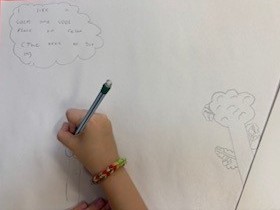
This term has been a busy one now that the SDLL project is in full swing. The research team and artists have been working closely with our partner schools to explore the first principle of permaculture: Observation. This foundational principle encourages us to slow down, pay attention, and develop a deeper understanding of the natural systems that surround us before we attempt to design within them. Across our participating schools, this principle has been explored through a rich programme of arts-based activities that have focused on each school’s unique local environment. Rather than introducing observation as a theoretical concept, children have been invited to engage directly with nature through exploratory, creative, and sensory experiences. These activities have supported them in noticing details, recognising patterns, and building a stronger connection to the places they inhabit every day.
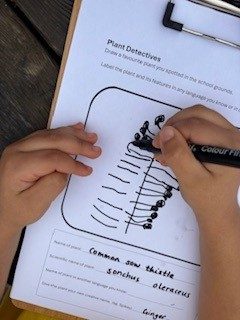
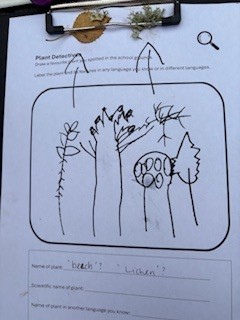
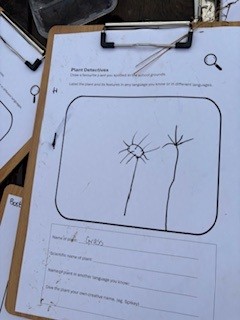
One of the activities delivered across schools was Plant Detectives. In this session, children explored their school grounds and nearby outdoor spaces equipped with magnifying glasses, transforming familiar surroundings into landscapes of discovery. Children carefully examined leaves, stems, and tiny organisms, often expressing surprise at the complexity and beauty revealed through close observation. The act of slowing down and looking closely encouraged patience and curiosity, helping children realise how much is happening just beneath the surface of everyday environments. Alongside practical exploration, teachers and the research team facilitated reflective conversations, prompting the learners to think more deeply about what they were seeing. Questions such as how plants adapt to their surroundings, what conditions support growth such as the importance of sun and shade prompted further discussion.
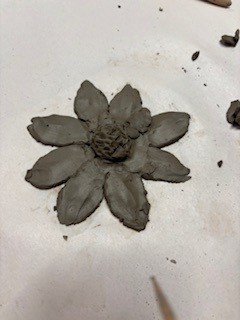
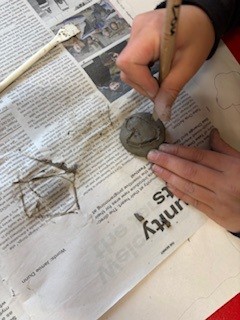
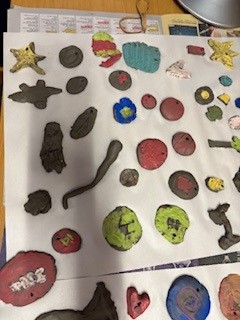
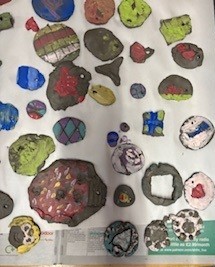
Another activity focused on observing an element that is often invisible yet constantly present: the wind. Through the creation of clay wind chimes, children discussed how wind moves through environment. They spent time thinking about the wind, noticing where it travelled, and how it interacted with buildings, trees, and open spaces. These observations informed their designs as they shaped clay pieces intended to respond to movement and sound. Working with clay encouraged a mindful, hands-on approach to making. Once installed outdoors, the wind chimes will become an ongoing tool for observation, allowing children to listen to and reflect on the presence of wind over time.
The impact of these activities has been strongly felt by teaching staff. Reflecting on the project, Lynne McGinn, Head Teacher at West Primary School, shared: “Taking part in the Learning for Sustainability project is helping to transform the way our children see the world. Through hands-on workshops and meaningful real-life experiences, our pupils have grown in confidence, curiosity, and compassion. As teachers, we have seen pupils take ownership of their environment, ask deeper questions, and recognise the power they have to create positive change—both in school and beyond.”
Across all schools, the work so far has established observation as a shared practice between researchers, artists, teachers, and pupils. Next term we will move on from observation as we start to think about the next stages of permaculture design: analysis and design.